


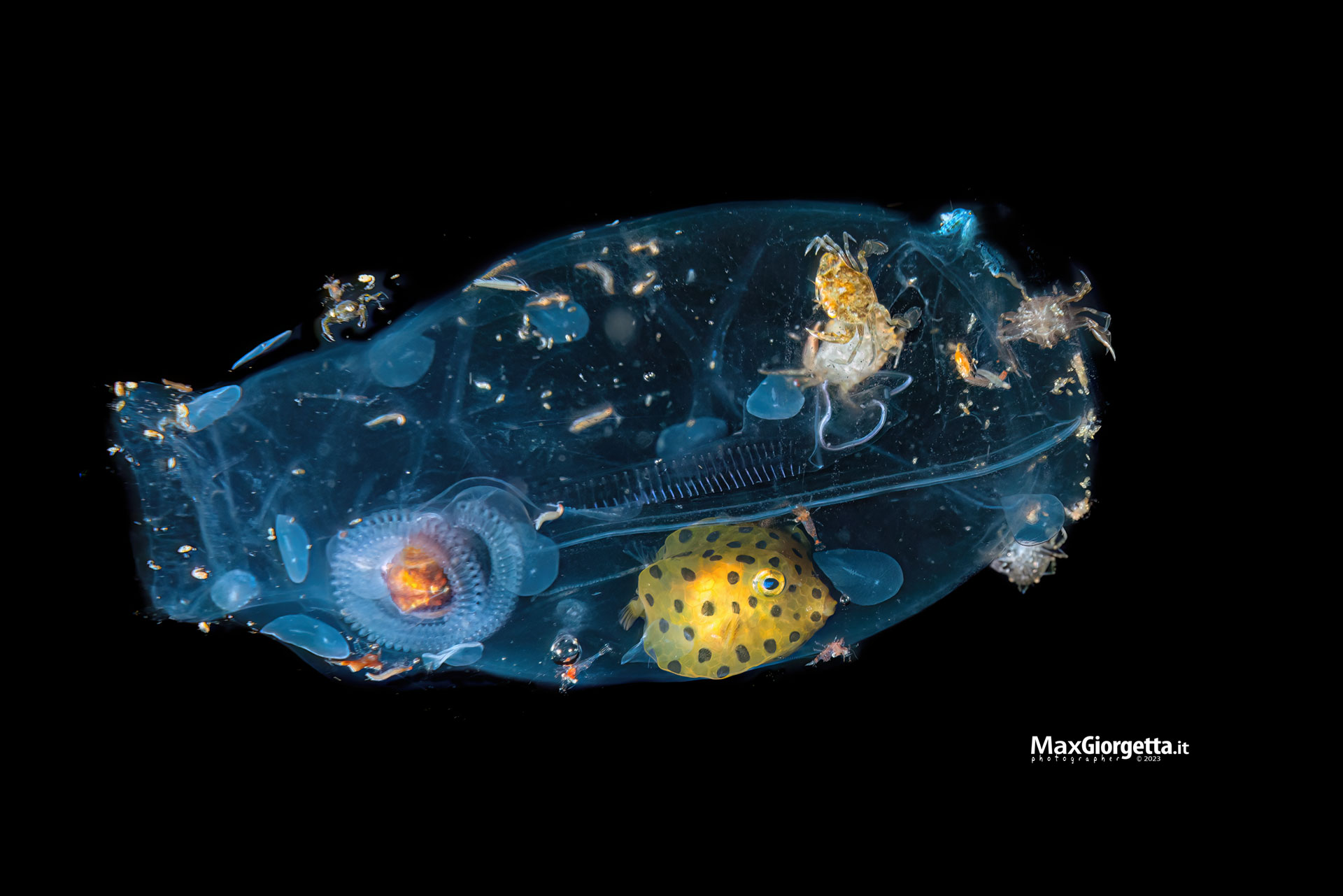
Sometimes you see a photo or article online that sends you down an incredible rabbit hole of knowledge you didn’t know anything about. This is exactly what happened when we saw this intriguing photo by photographer and diver Massimo Giorgetta. The photo is of a tunicate salp in the Lembeh Strait, one of the areas guests at Gangga Island Resort & Spa frequently visit on dive trips. This particular salp is so transparent that we can see everything it has eaten, or that is passing through its body.
So what is this incredible creature? Let’s learn about salps and their role in marine environments like the seas of North Sulawesi.
What is a Salp?
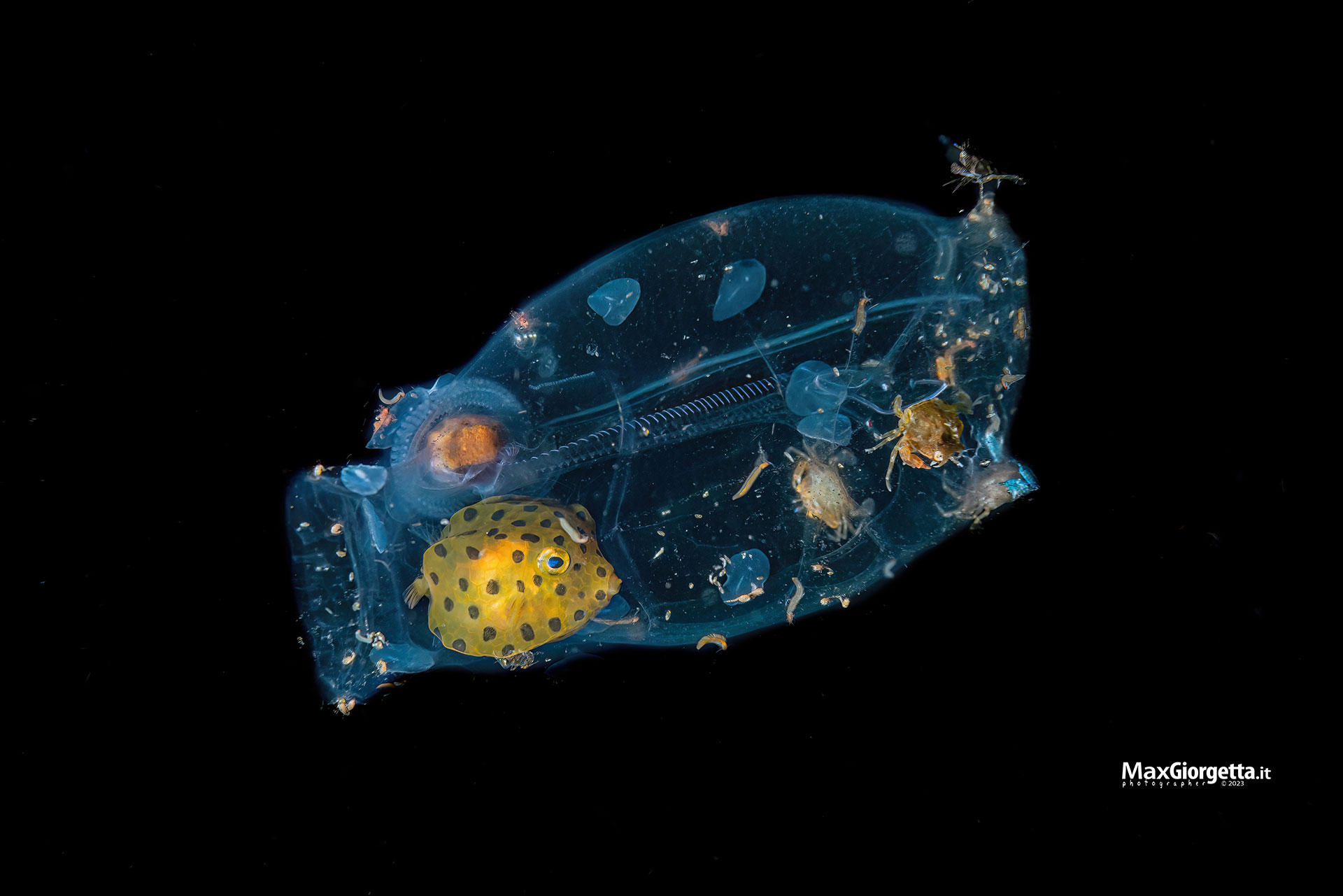
Salps may look a bit like jellyfish with no tentacles, but they are actually members of the group tunicata, eloquently known as sea squirts. Larval salps have a spine of sorts called a notochord, which makes them more closely related to vertebrates than jellyfish. This notochord is lost as salps grow, which is why they are often misidentified as a type of jellyfish, especially when they are washed up on the shore.
How to Identify a Salp
Salps are transparent or semi-transparent barrel-shaped animals that propel themselves through the water using an incredible muscular system. They are ringed by bands of muscles that contract, drawing water in the front of their bodies and out of the rear. This is an incredibly efficient jet propulsion set up that is rarely seen in the animal kingdom.
Salps are typically between 1-10cm long but individuals up to 30cm have been recorded. They are the 2nd most common type of zooplankton in the world and are often seen in large swarms, helping to identify them.
As you can see in the original photo, salps eat absolutely anything. They catch their prey with a sort of net made out of the mucus that covers the inside of their body. Food is sucked into their body from their net as they propel themselves through the water.
Around 20 out of the 70 species of salps worldwide have been identified in Indo-Pacific waters but there is very little information about them specifically in Indonesia. There are some great photos out there though, so have a search for salps in Indonesia.
Salp Reproduction
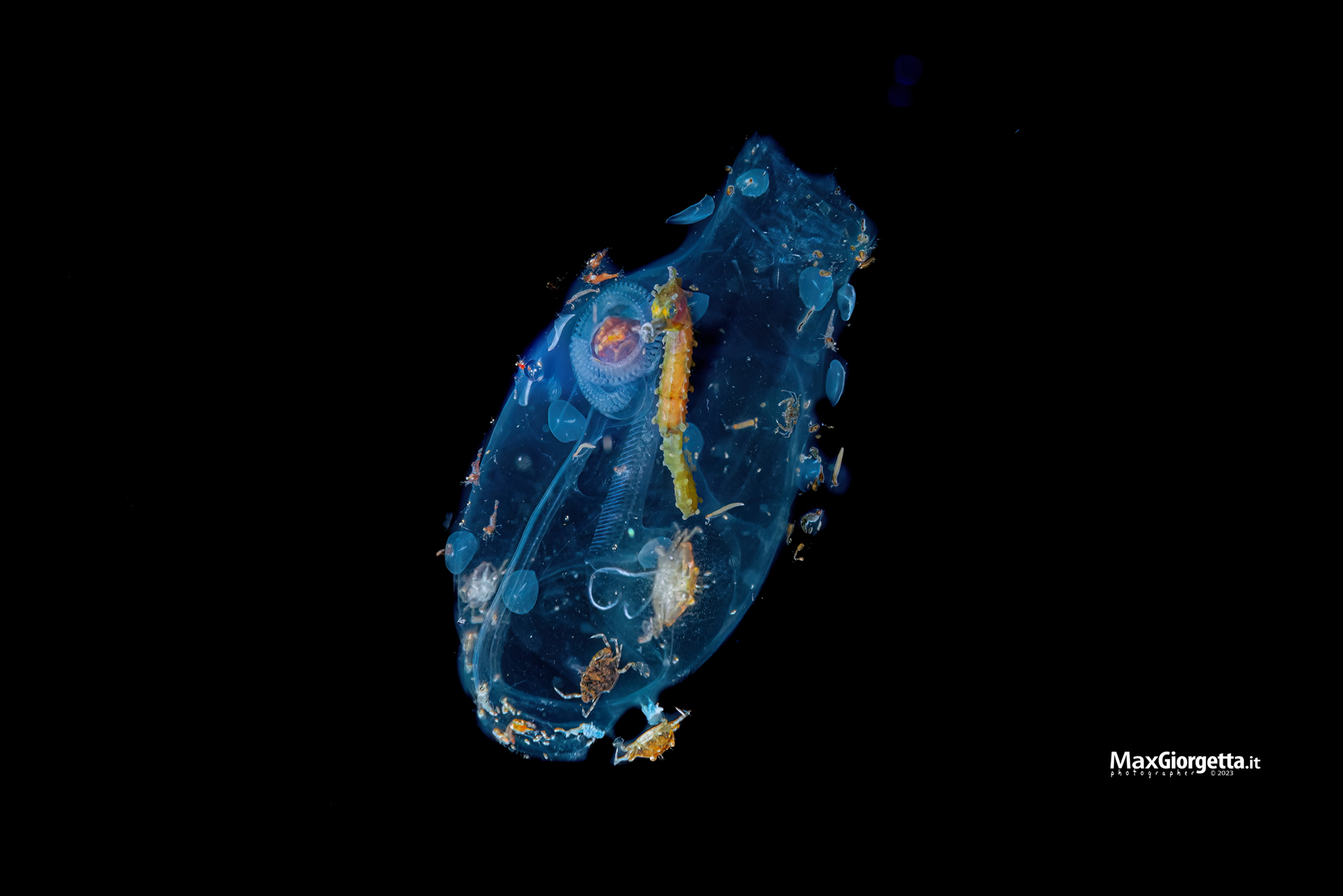
One of the most interesting things about salps is their complex life cycle. They are alternately both sexual and asexual – the asexual form being solitary and the sexual form aggregates because they reproduce in a colony.
An asexual salp will produce between 20 and 80 identical embryos that are released in a chain. These chains will eventually break off into individuals that in turn create their own chains of embryos.
The wonderful thing about this is how fast it all happens. Salps can reach maturity in just 48 hours, especially during an algae bloom which switches their reproductive cycle into overdrive due to the abundance of food. This makes salps incredibly important in the cycle of nutrients through the different depth zones of the oceans.
Why Do We Need Salps?
These odd looking creatures may seem completely unnecessary for the environment, but in fact they have a huge impact. Because of their abundance in our oceans, their presence is necessary for the balance of nutrients and the creation of carbon.
Their fecal matter and the bodies of salps carry carbon to the bottom of the sea floor. Changes in their numbers or distribution can actually affect the ocean’s carbon cycle and potentially play a role in climate change. So, for such a small, seemingly insignificant creature, their health and numbers is far from inconsequential.
Salps are also an important food source for oceanic sunfish, blue-ringed angelfish, and divers in North Sulawesi report seeing sea turtles feasting on salps during algae blooms.
We Are Always Learning
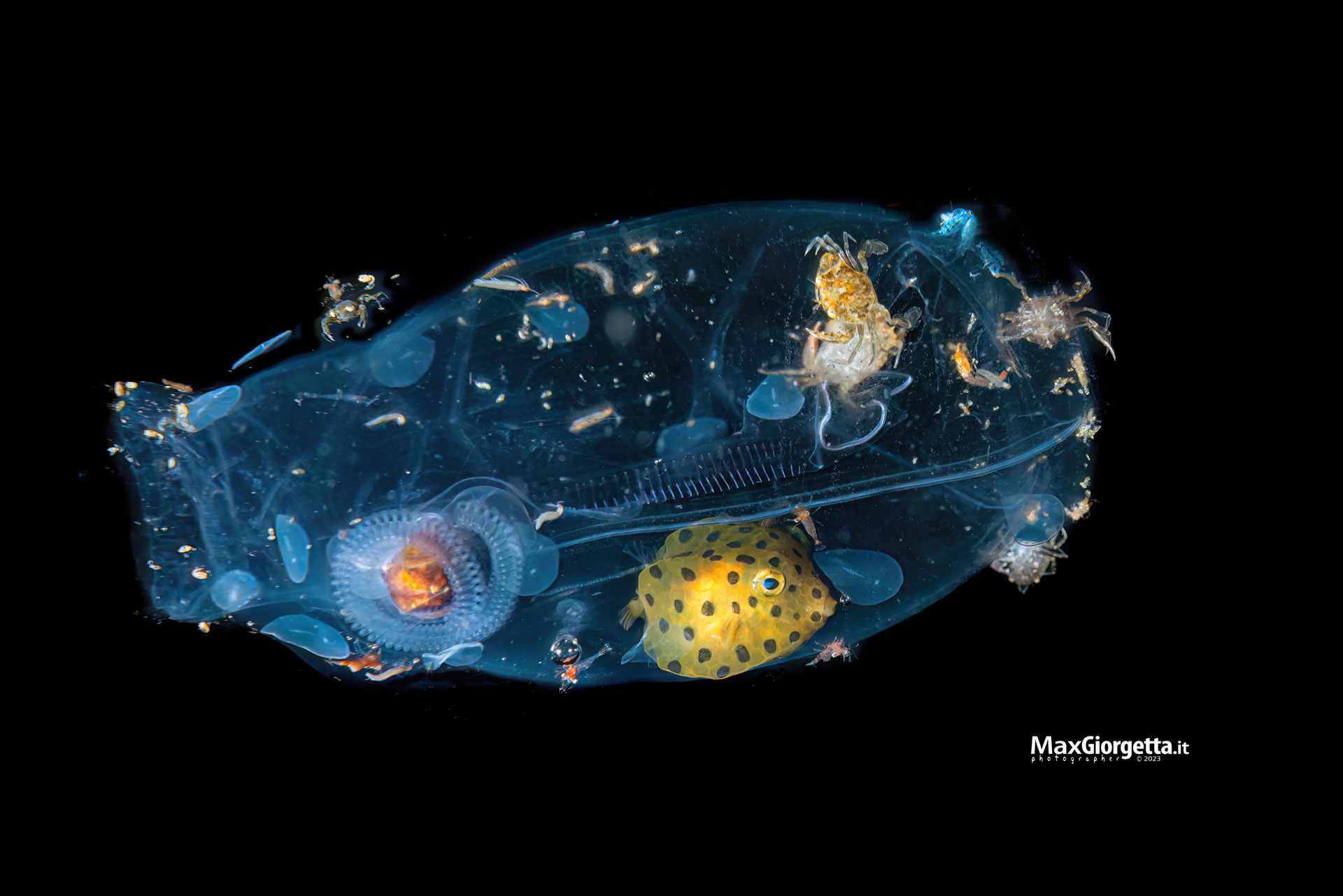
Marine life never ceases to amaze us, and we hope that this has been a bit of an eye opener for you as well. Next time you are diving with Gangga Divers, or elsewhere in the world, you might recognize salps and give them a little thanks for everything they do for the health of the oceans.
Sources & Credits
- Inspired by an article from Colossal on the fascinating world of tunicate salps
- Underwater photography by Massimo Giorgetta
- View more of his work on LensCulture