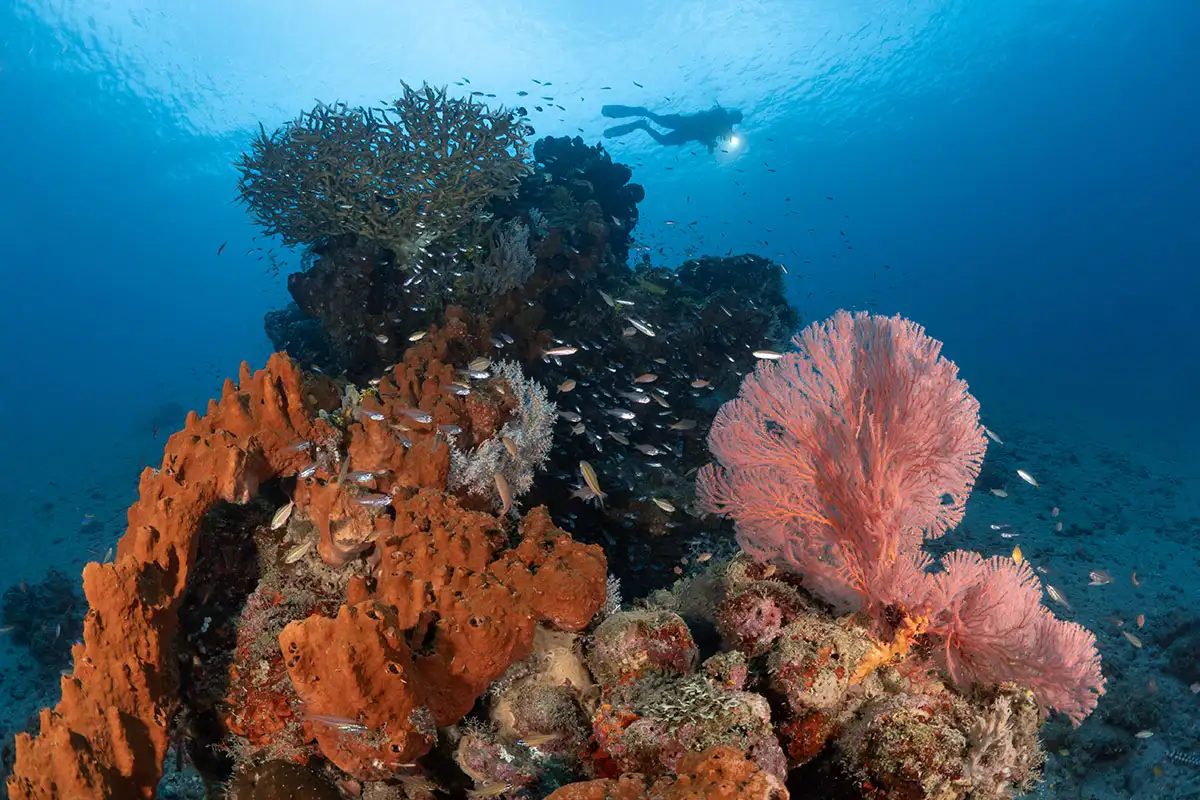



Raja Ampat has more species of marine fauna than almost anywhere else in the world. Within this range of species there are some massive and some so tiny they are almost invisible to the human eye. Let’s take a look at some of the biggest and smallest creatures you may come across in Raja Ampat.
The Big Guys
Rays
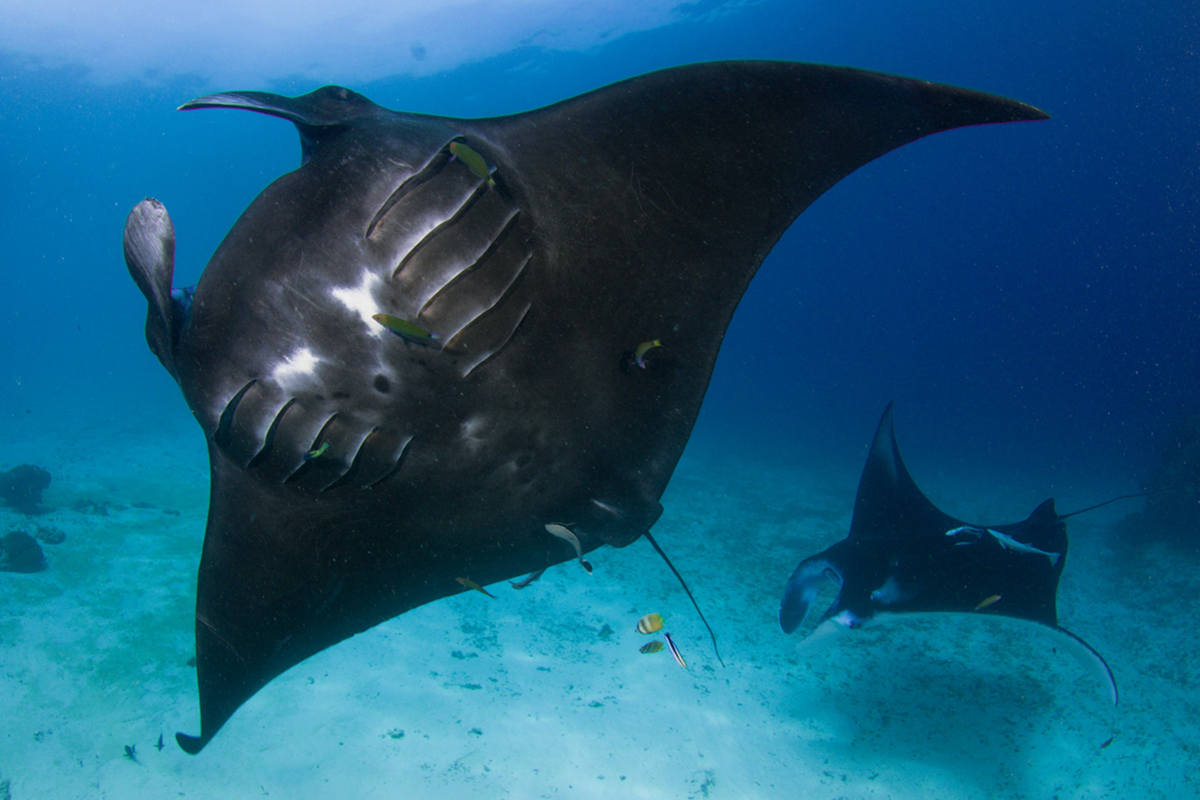
If you have ever had the pleasure of diving with rays, you will know that it is a mind-blowing experience. Raja Ampat has a selection of rays including black reef mantas, devil rays, and the largest of all, oceanic mantas. Oceanic mantas have a wingspan of between 5 and 7 metres. Diving with mantas of this size gliding over you explains exactly why they are named after the Spanish word for blanket.
Sharks
Since 2013 the whole of the 46,000 square kilometres of Raja Ampat has been a shark sanctuary. This means there are some incredible shark species to see when you are diving in the region. Black tip, white tip and grey reef sharks thrive on the bounty of prey on Raja Ampat’s reefs so you see them on most dives. These sharks aren’t massive at around 1.5 to 2 metres but they are pretty impressive swimming around you.
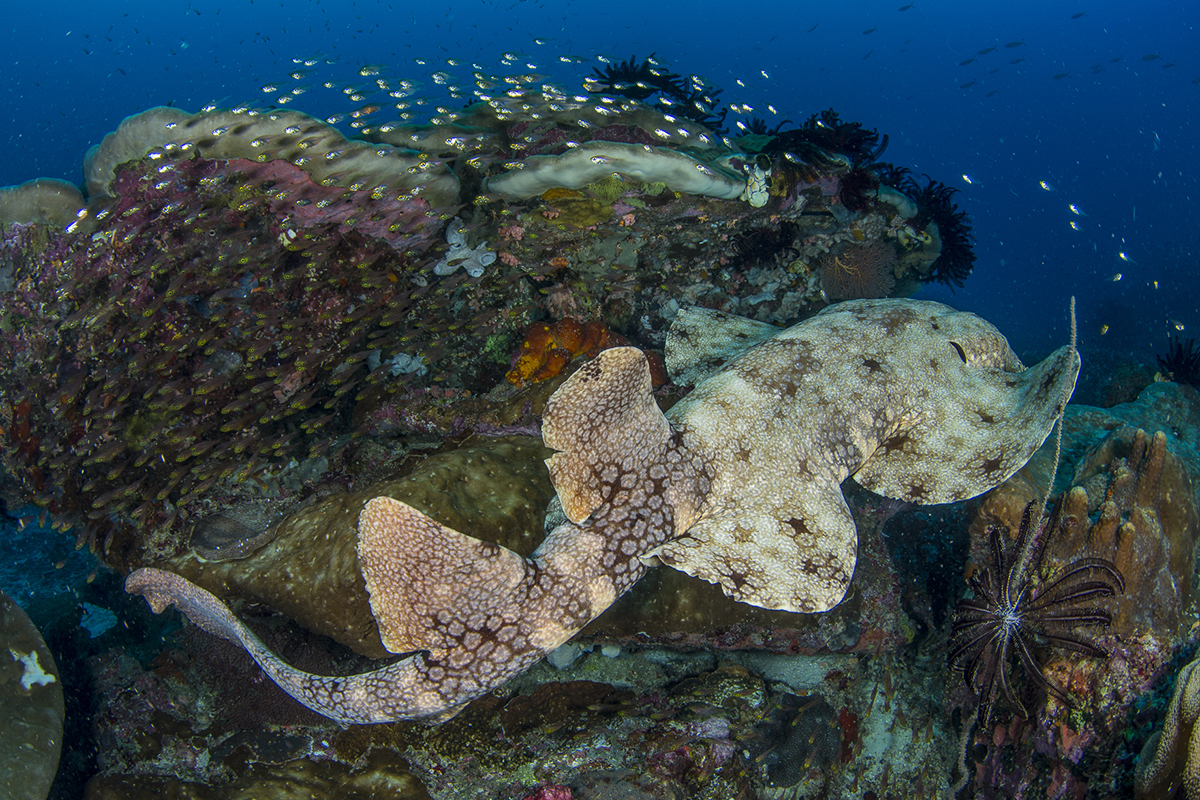
Wobbegong sharks are also found in abundance in Raja Ampat. They are generally around the same size as reef sharks, but have been seen up to 3 metres. Both tasselled and ornate wobbegongs can be found “walking” along the seabed.
Teeny Tiny Species
Fish & Seahorses
For those who like to look a little closer there are plenty of macro species to look out for. This will be especially exciting for underwater photographers who love to get really personal with their subjects.
One of the toughest fish to spot is the frogfish. There are a number of different species of frogfish and all are small and masters of camouflage. Pipefish are also plentiful, equally tiny, and good at hiding themselves amongst the coral.
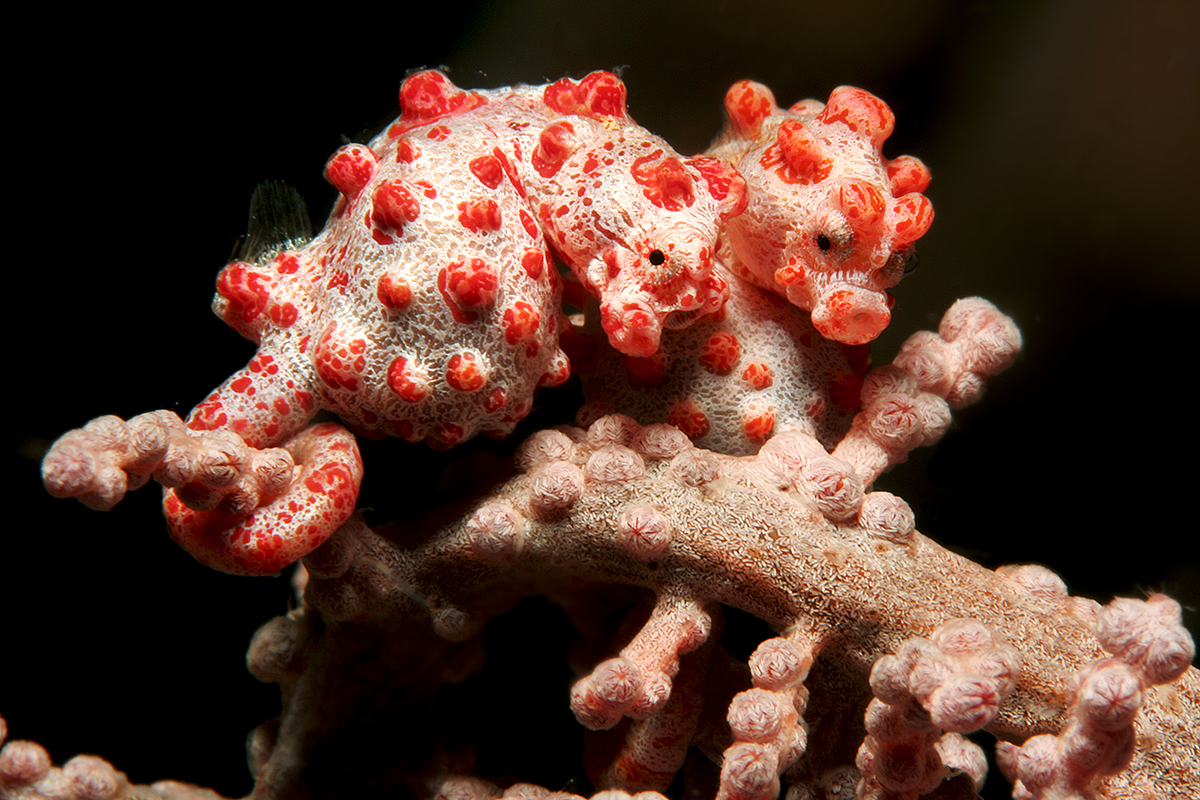
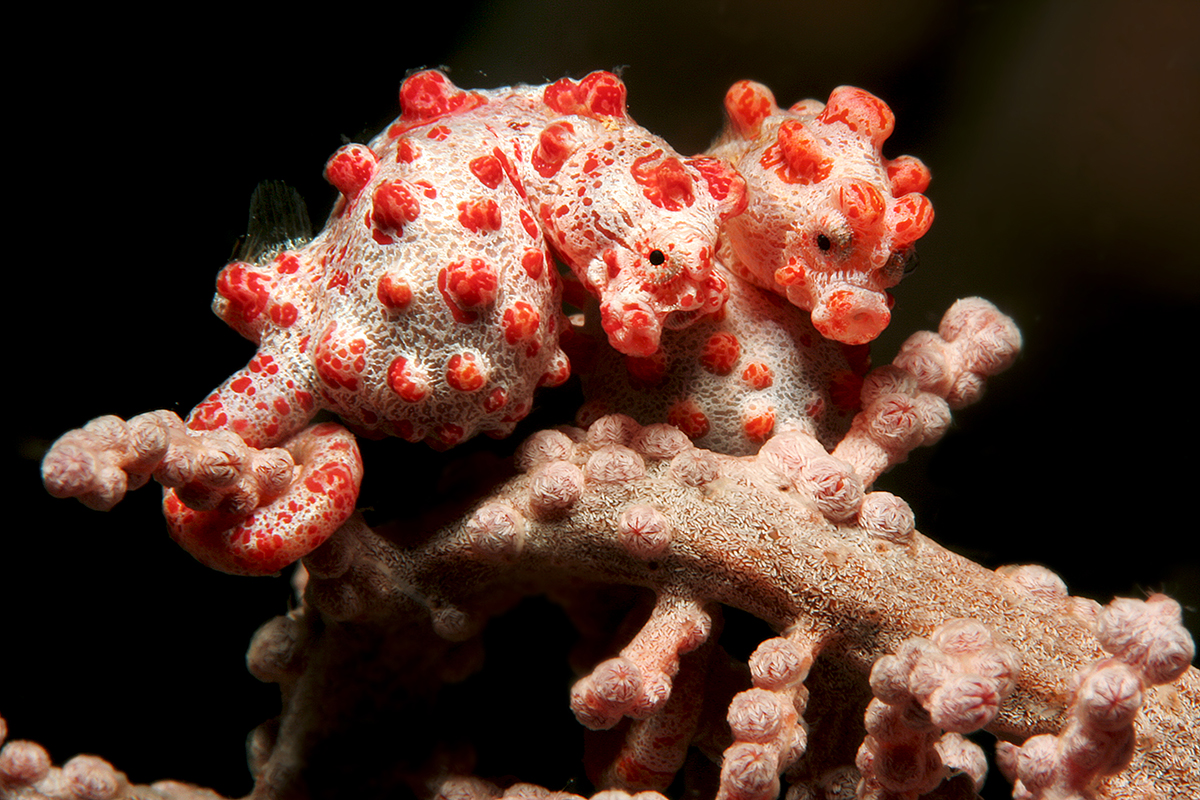
Pygmy seahorses are probably the most minute macro species to be found in Raja Ampat. They can range from an almost invisible 0.5 centimeters in length to and eye-straining 1.5 centimetres. It takes some serious skill to catch sight of these seahorses as you drift but if you do see one, it’s a real pleasure.
Nudibranchs
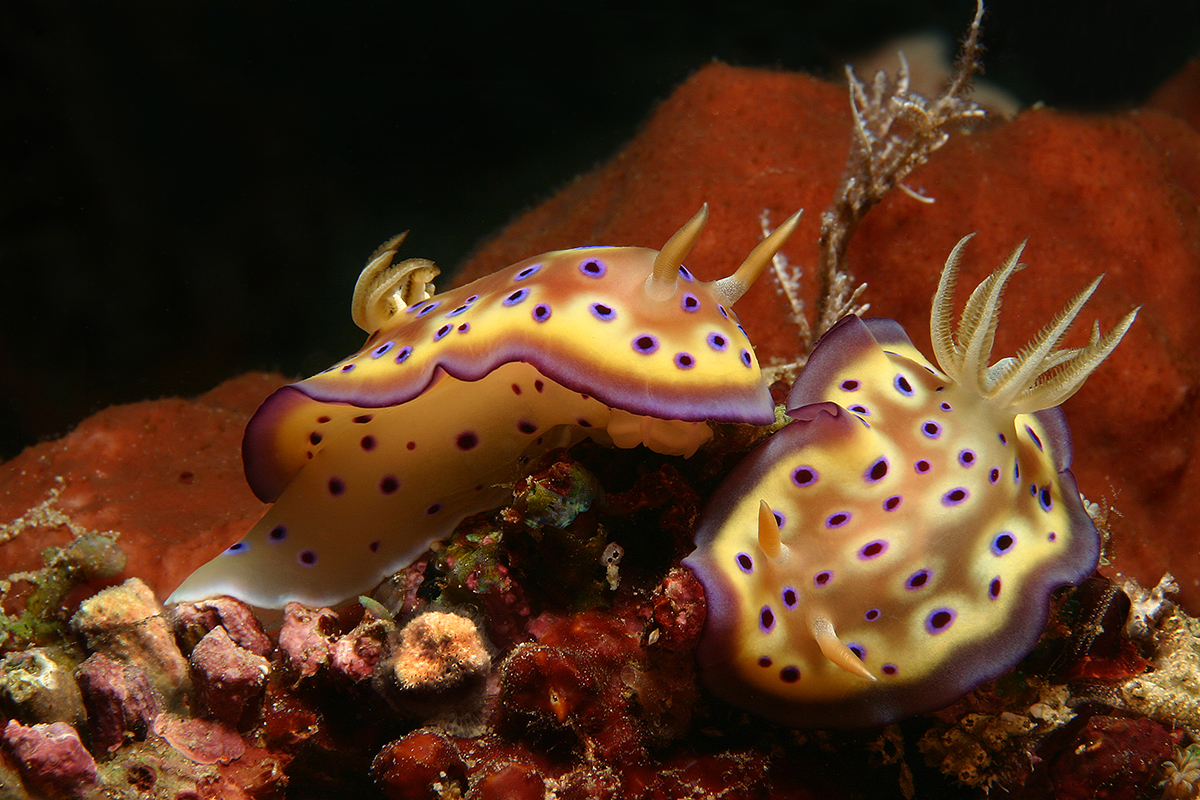
There is no marine animal more varied when it comes to colours and shapes. They also happen to be some of the best macro subjects in Raja Ampat. When we talk about nudis we talk in millimetres as well as centimetres. They can be between a microscopic 4mm up to around 30cm. Some of the most incredible underwater photos are of colourful and flamboyant nudibrans taken with a great macro lens.
These are just a few of the amazing species you will get to dive with in Raja Ampat. There are thousands of species in between the largest and smallest. What are the biggest and smallest species you have dived with? We would love to hear about your experiences in the comments box below.