Fields marked with * are required.
Diving in Raja Ampat
Explore Raja Ampat’s Extraordinary Underwater World
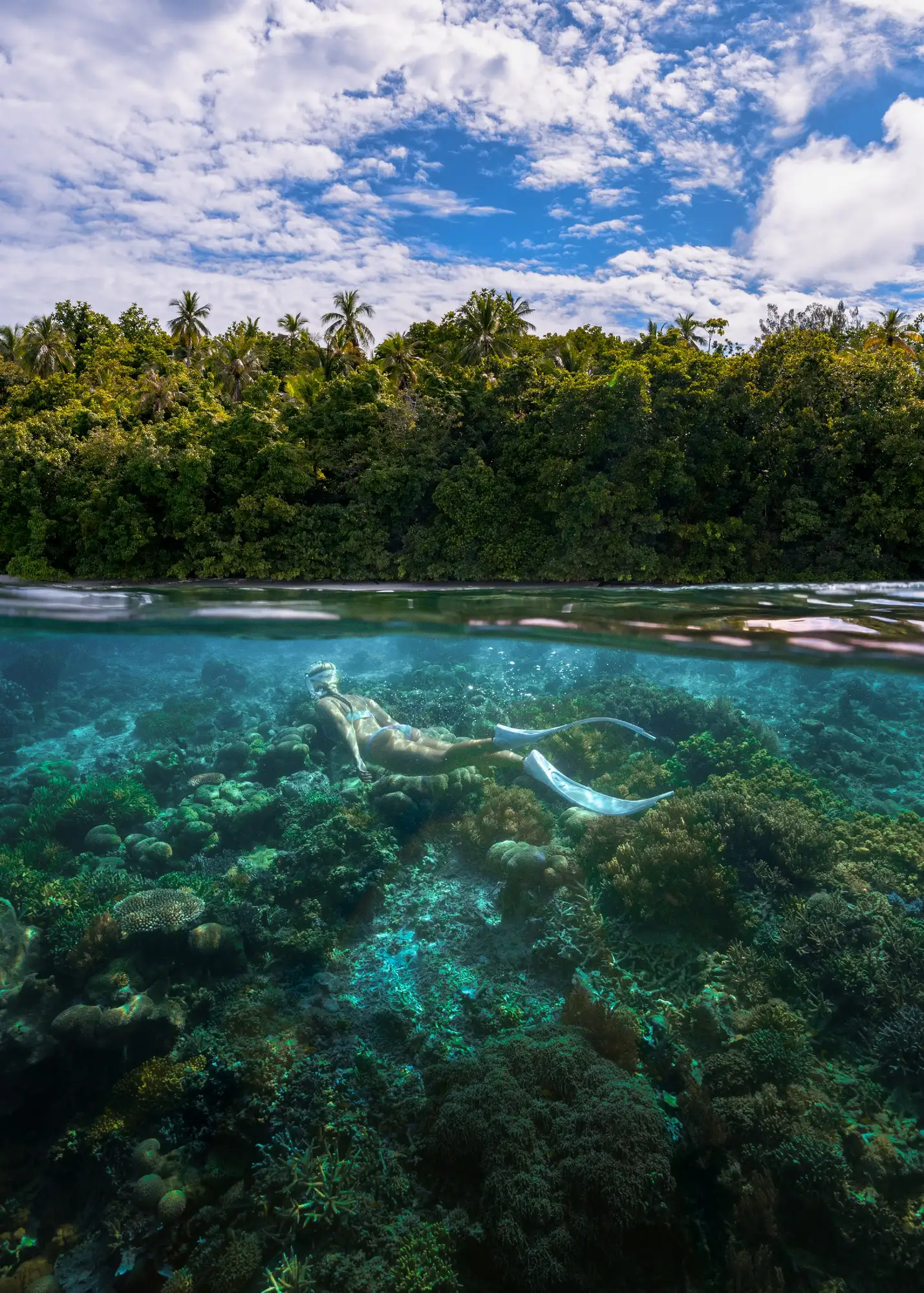
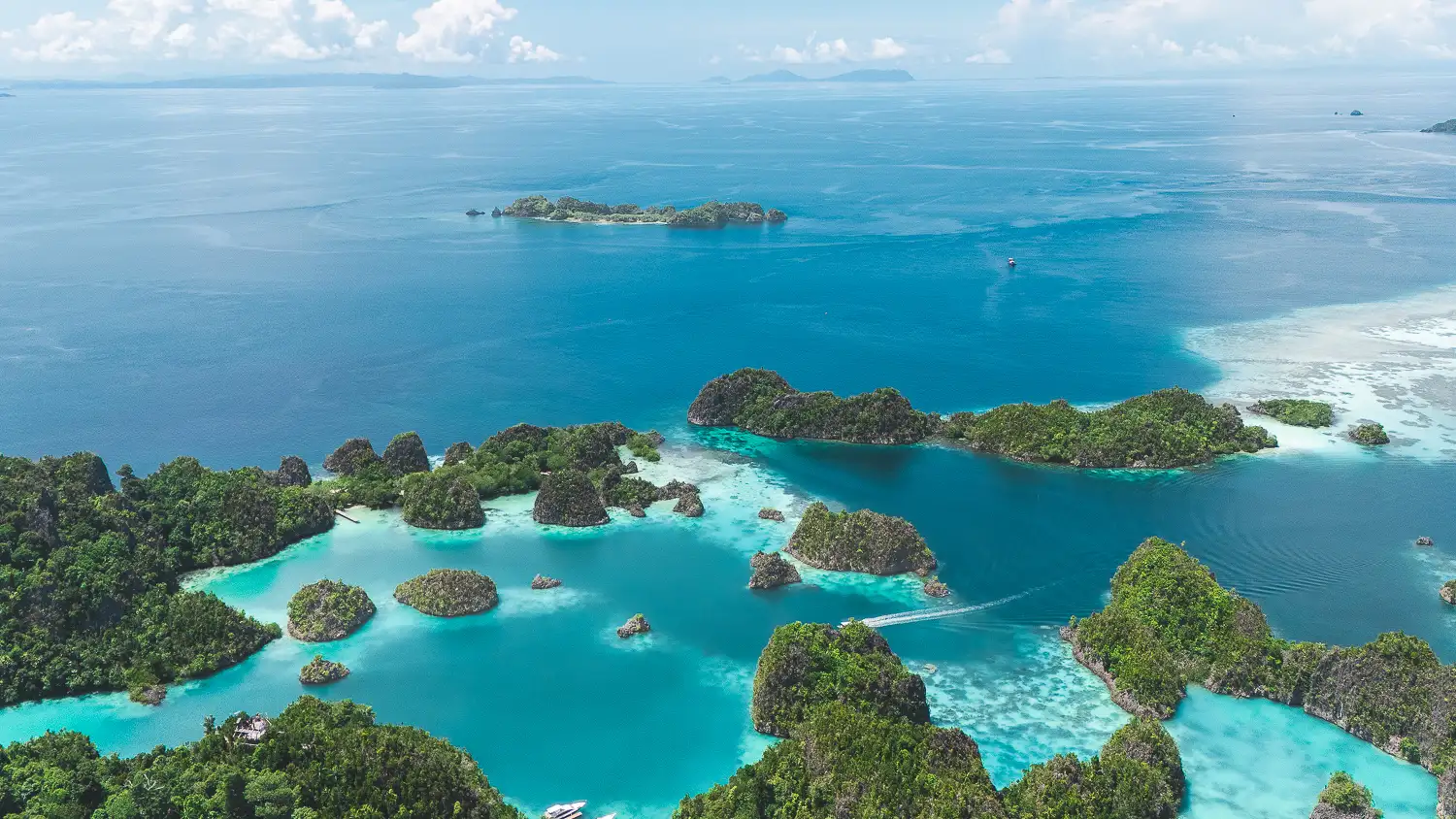
Dive one of the most biodiverse marine regions on Earth with Lotus Divers off the northern coast of Batanta in Raja Ampat. Big animal encounters, colourful reefs, and macro life make this region popular with underwater photographers, snorkellers, and divers of all levels. Our team leads dive and snorkel excursions to over 80 sites featuring thrilling drift dives, well-preserved wrecks, dramatic pinnacles, and so much more.
Our PADI 5 Star Dive Resort team is made up of international and Indonesian guides and instructors, each bringing deep knowledge of Raja Ampat’s waters to every dive. We keep dive groups small for a safe and personalised experience tailored to your interests, comfort and certification level. And as a Green Fins dive centre, we invite you to be a part of our mission to preserve and honour our pristine waters and the marine life that makes a home here.
The dive centre features a spacious, air-conditioned camera room so underwater photographers have everything they need before and after a dive. The room is well lit and includes camera preparation areas, storage space, a wash basin, high-pressure air gun, computer workspace, Wi-Fi access and a TV for reviewing images. The camera room is locked overnight for added security.
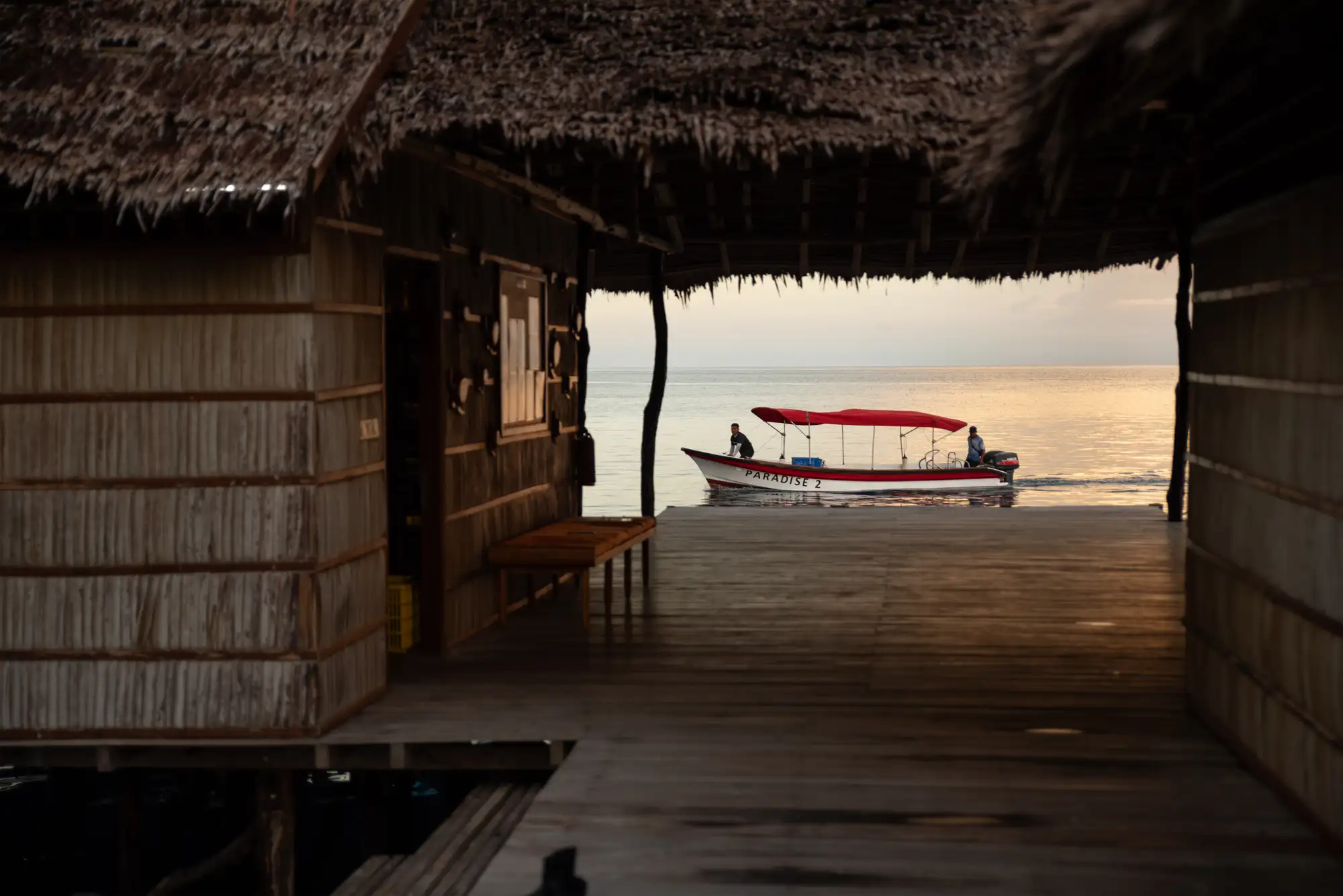
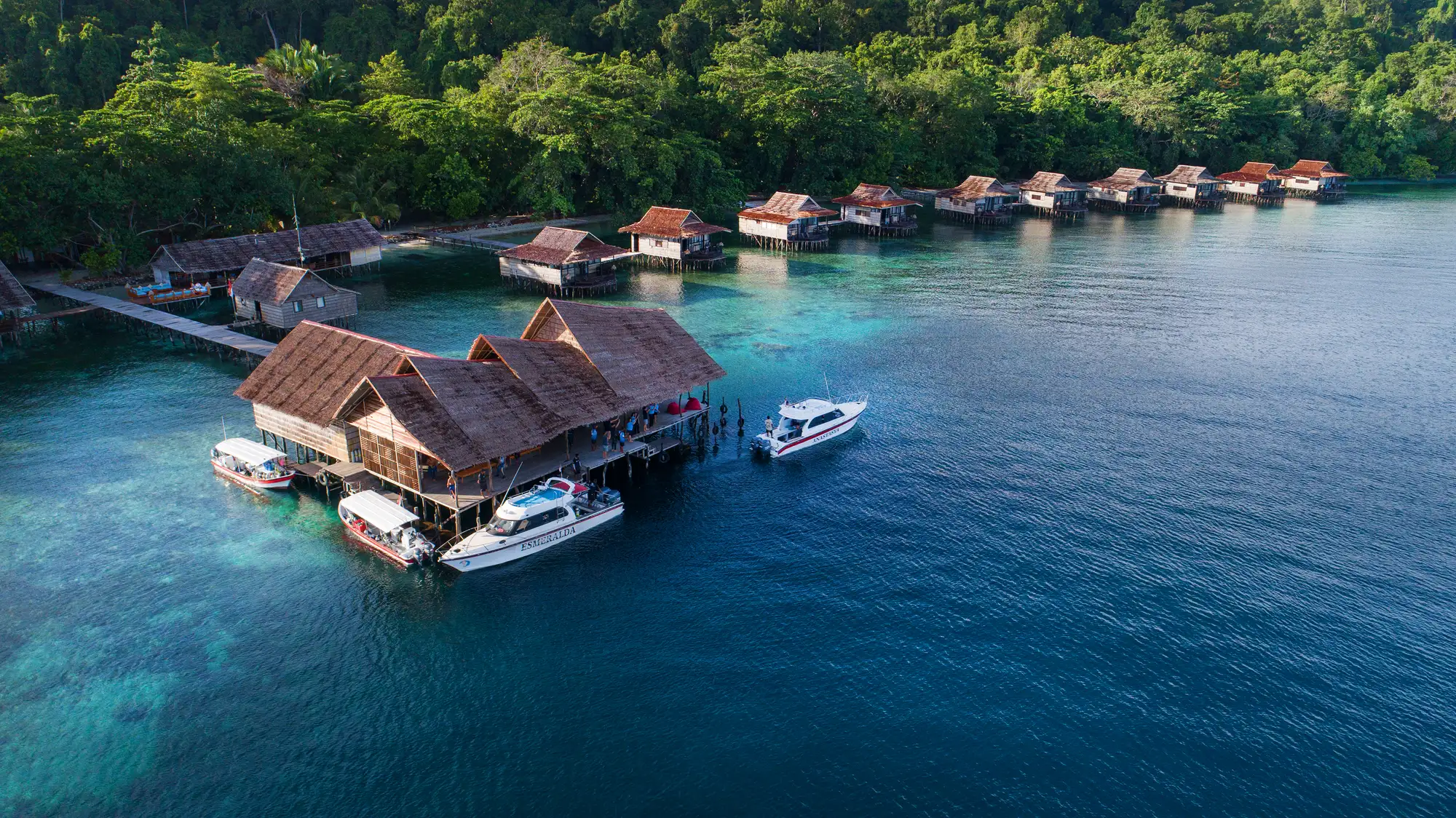
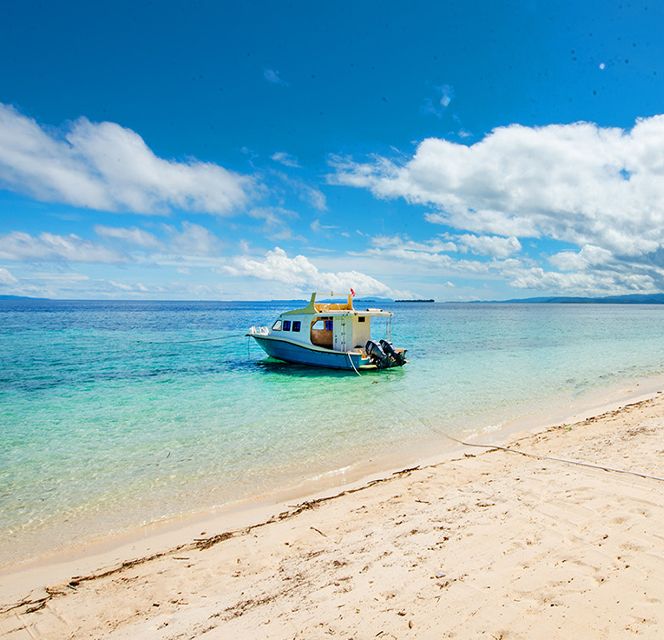
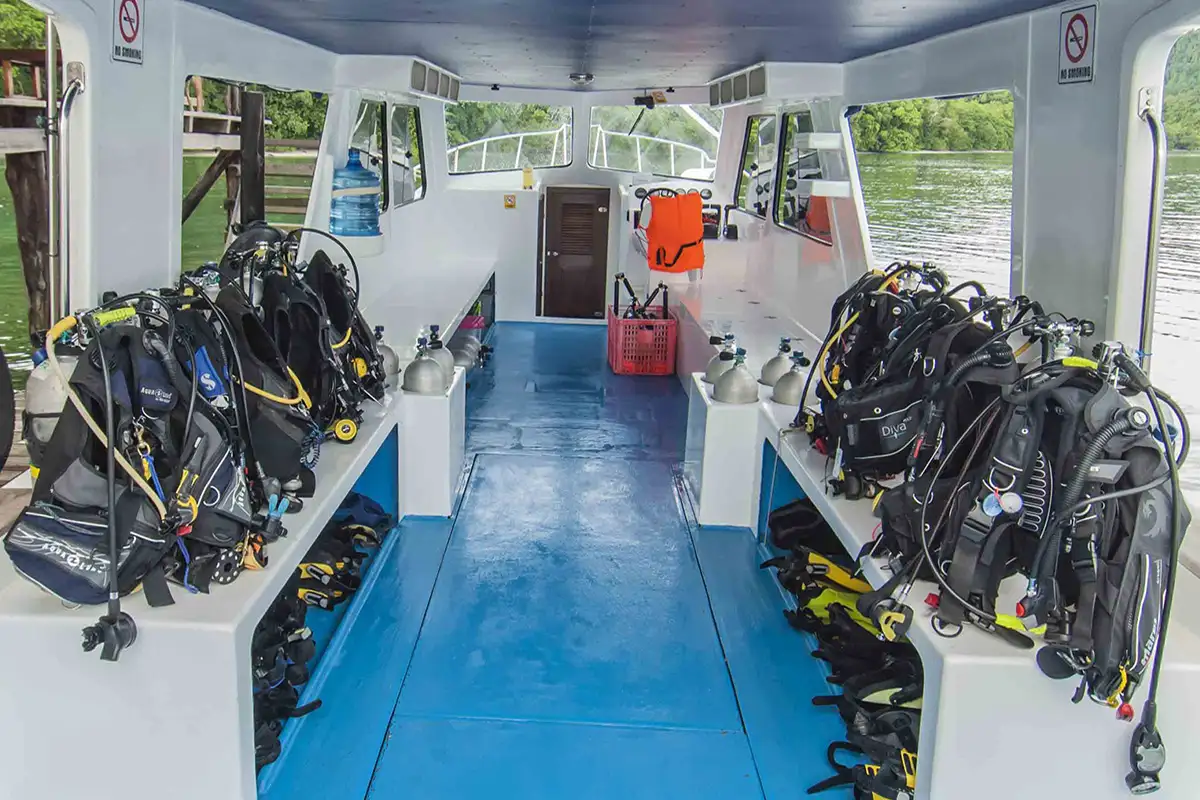
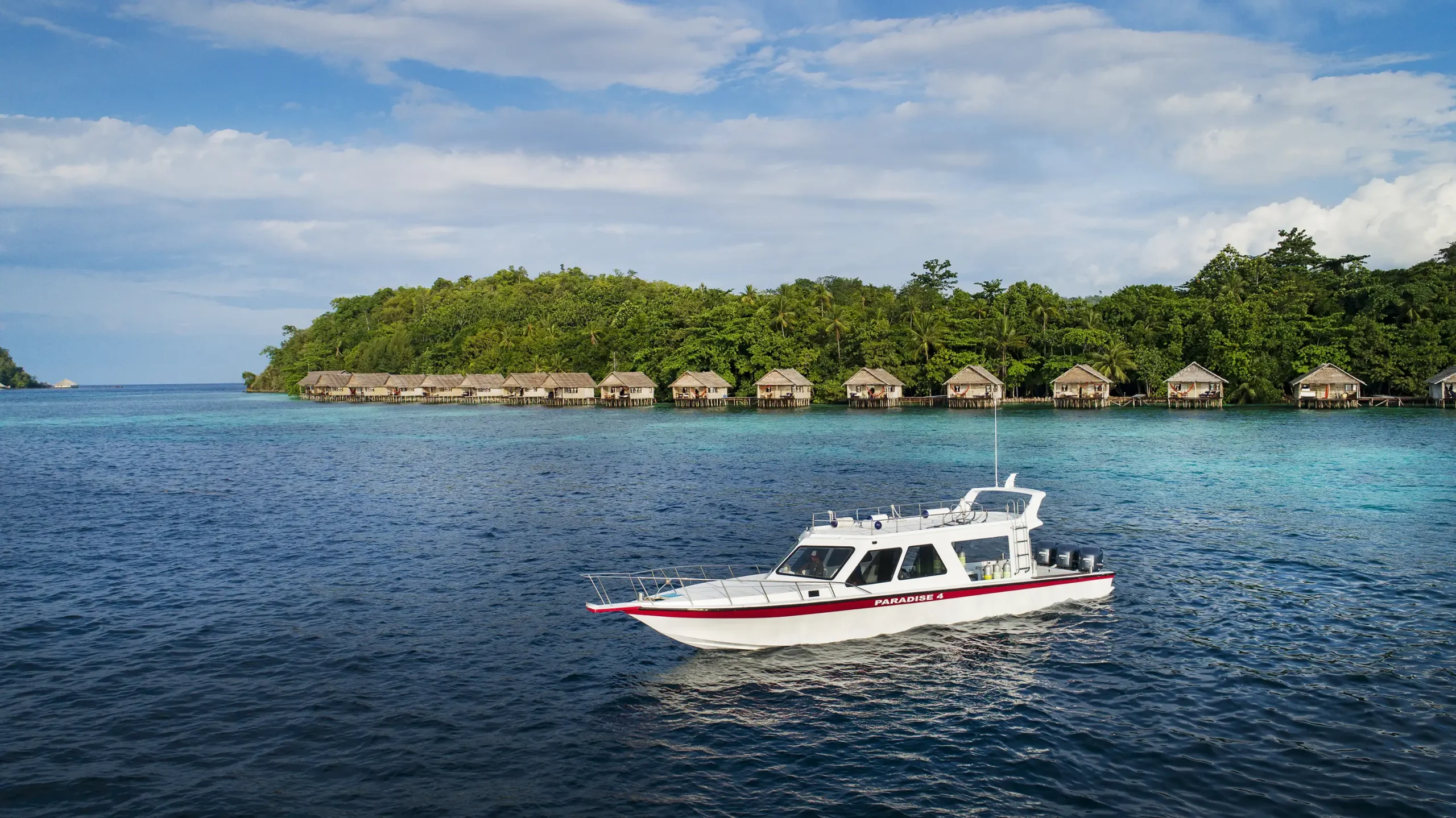
The dive centre at Lotus Papua Paradise operates a fleet of comfortable, custom-built dive speedboats designed for safety, space and convenience.
Our fleet of larger dive boats is designed for longer day trips and larger groups. They are equipped with multiple engines and covered areas for shade. Equipment Storage and tank holders are conveniently positioned close to the seating areas
Our smaller fiberglass speedboats are ideal for smaller groups, local dive sites, day and snorkelling trips. Each boat is comfortably arranged for up to four divers and includes conveniently placed tank holders close to the seating area. Some boats also feature retractable soft roofs, making them suitable for birdwatching and other non-diving excursions.
Our storage room provides dedicated storage space for personal or rental equipment, including hangers and a basket conveniently located at the jetty. After diving, our team rinses and hangs equipment and leaves wetsuits and skinsuits drying overnight on the sheltered outdoor drying racks so they are ready for the next day’s activities!
The dive jetty is a comfortable space for preparing before dives and relaxing between activities, with seating areas, beanbags, drinking water, marine life identification posters, camera and wetsuit rinse basins, dive trash bags, kayaks and stand-up paddleboards on hand. Discover Scuba Diving and refresher briefings also take place here before getting in the water. A lowered platform around the jetty makes it easy to move to and from the boats and water.
After each dive, relax in our comfortable seating area and use our collection of Fish ID books to identify the marine life you’ve encountered. Our dive guides are always happy to help you discover and learn more about the incredible species you’ve seen underwater.
Dive sites
Lotus Divers guides dives in 50+ sites across Bali, Nusa Penida, and Lembongan. Explore dramatic ocean topography, catch thrilling drifts, and encounter a plethora of marine life year-round. Whether you’re just starting out or taking your diving deeper, there are dives for every level.
Information
Details
Centred around the village jetty, this colourful and highly photogenic site follows a reef slope with healthy coral gardens, offering an appealing mix of wide-angle scenery and smaller reef life. You can dive this site year round.
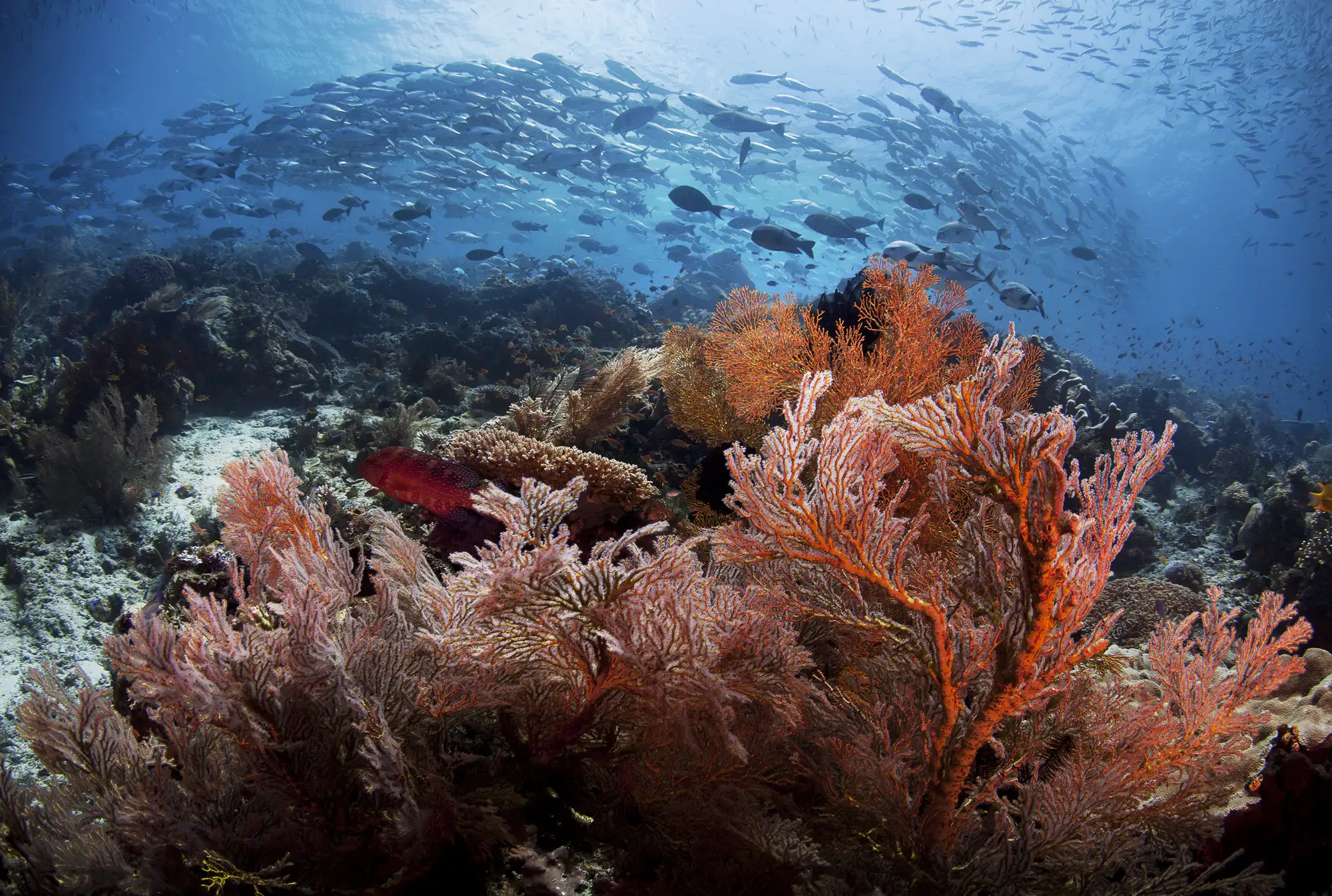
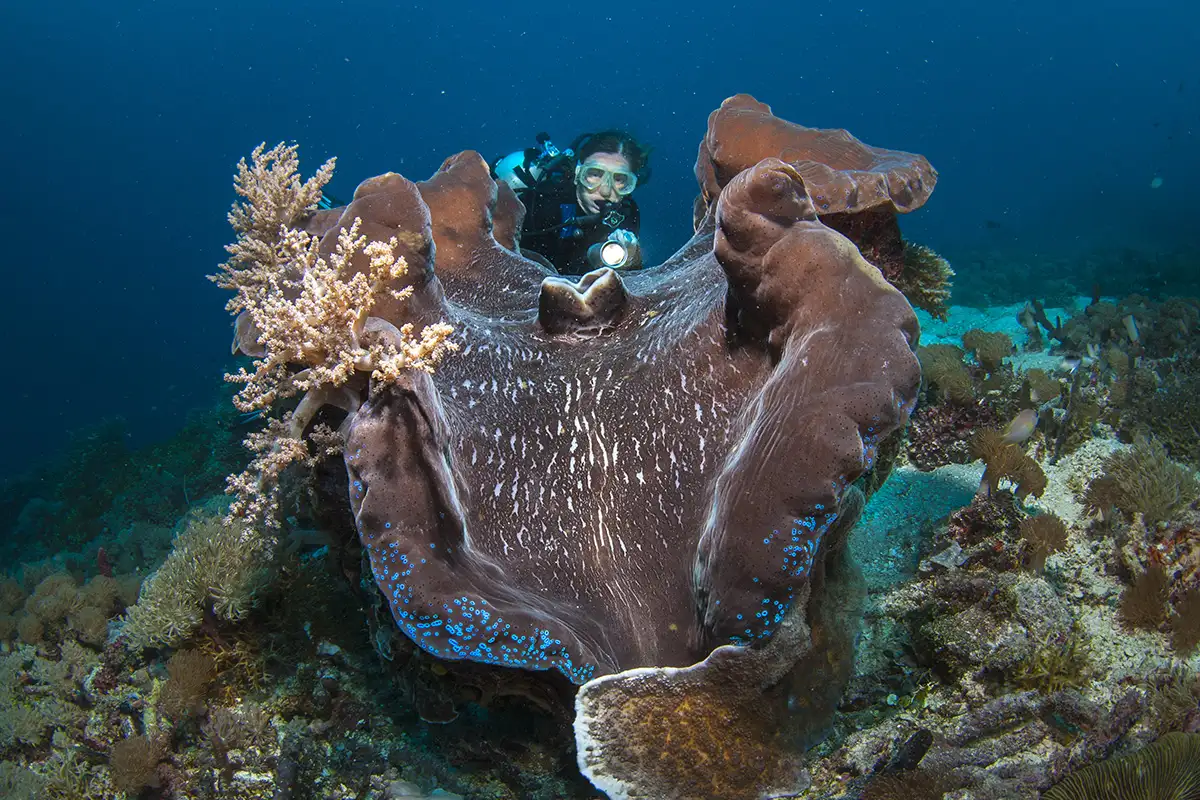
Schooling jacks, sweetlips, fusiliers and batfish gather beneath the jetty structure, while damselfish move through the colourful soft corals nearby. Giant clams sit embedded across the reef.
Information
Details
Located near the village of Arefi, this sloping reef is covered in colourful zoanthids, making it a striking site for wide-angle and macro photography. Slow down here and look closer to find the smaller creatures hiding in the reef. You can dive here all year round.
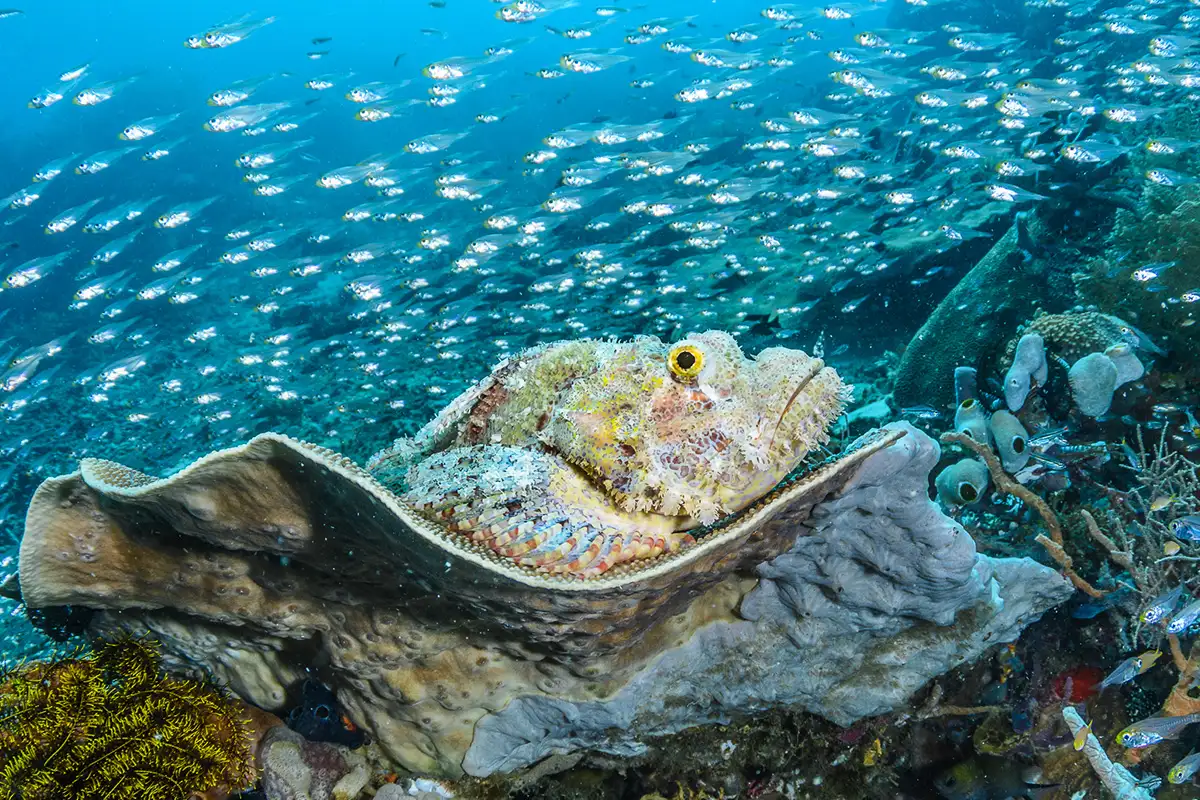
Look for banded pipefish and double-ended pipefish tucked among the coral, along with crocodile fish, scorpionfish and nudibranchs. Zoanthids and crinoids add further colour and texture across the reef.
Information
Details
Ayof is a varied site offering both macro life and impressive schooling fish. Begin your dive along a colourful reef slope before reaching a lively corner alive with movement. Dives year-round.
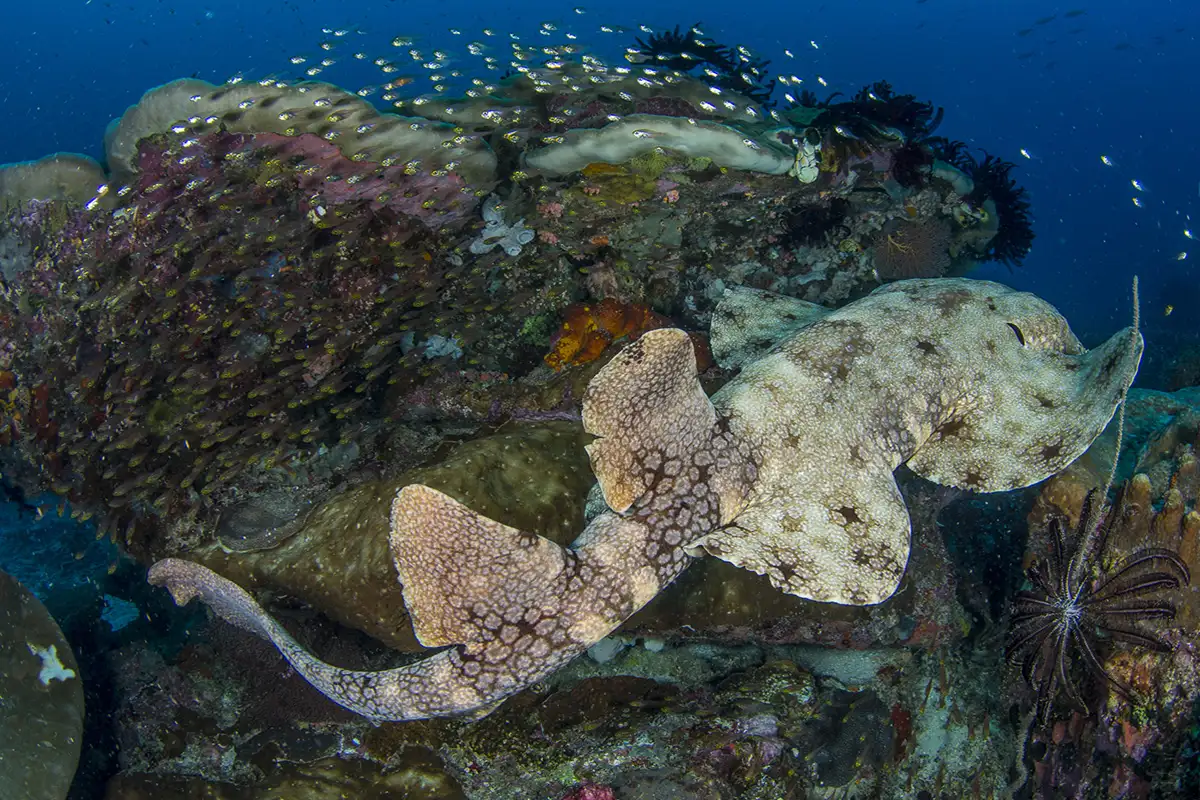
Fusiliers stream past while jacks gather in schools nearby. Anemonefish defend their homes among the coral, and you might encounter large groups of black snapper and barracuda. Look closer to find lionfish, nudibranchs, wobbegong sharks and scorpionfish tucked into the reef.
Information
Details
At higher tides, a shallow swim-through opens up as one of the standout features here, its passage lined with sea fans before it spills into a sheltered “fish bowl” of reef scenery. Dramatic limestone walls and slopes meet delicate macro life in a single dive, making this one of the more varied sites in the Fam Islands. It dives year-round.
Alongside the sea fans, keep an eye out for Denise pygmy seahorses and a rotating cast of colourful nudibranchs, from Chromodoris to Halgerda. Also watch for Napoleon wrasse, batfish and bumphead parrotfish.
Information
Details
This narrow pinnacle is best enjoyed as a current-assisted drift dive. Enjoy the exhilarating feeling of flying through a wall of marine life. When conditions allow, you can hover in the moving water at the top of the pinnacle. Diveable all year round.
Schooling bannerfish and batfish crowd the pinnacle alongside hunting trevallies, while anthias and damselfish blanket the structure in colour. Keep an eye out for occasional eagle rays passing by.
Information
Details
This famous offshore pinnacle is a highly requested site and must be booked in advance. Find dramatic pelagic action, manta encounters, and dense fish life. Predator activity makes it one of the most exciting sites in the Dampier Strait. The best season to dive here is October to April, and visits are subject to sea conditions, currents, and diver experience.
This reef draws predators like grey reef sharks, blacktip reef sharks, whitetip reef sharks, tawny nurse sharks, tuna, giant trevally and barracuda. Other highlights include oceanic and reef manta rays.
Information
Details
One of Raja Ampat’s most famous dive sites, Cape Kri holds the record for the highest fish count ever recorded on a single dive — 374 species — drawing its reputation from sheer biodiversity. This reef slope and current-fed corner is a popular and highly requested site. Although diveable year-round, visits are subject to currents, sea conditions, and diver experience.
Among the hundreds of marine species here, the following are particular highlights: yellowtail snapper, giant sweetlips, fusiliers, barracuda, trevallies, blacktip reef sharks, whitetip reef sharks and grey reef sharks.
Information
Details
One of Gam’s most visually striking dive sites, this colourful drift dive takes you through a mangrove-lined channel. Gentle reef slopes, sandy sections and coral bommies lead to a central pinnacle covered in vibrant orange, yellow, red and green soft corals, with large sea fans, sponges and dense coral growth surrounding it. Dives year round, conditions dependent.
Schools of fusiliers, barracuda and surgeonfish move through the current around the pinnacle. Bumphead parrotfish, turtles, nudibranchs, octopuses and scorpionfish are also commonly encountered, with wobbegong sharks making the occasional appearance.
Information
Details
Fam Slope is a gentle, macro-focused reef slope that is best explored slowly and carefully. Search for sea fans, coral patches and sheltered areas for tiny and well-camouflaged creatures. Diveable year-round.
Bargibanti and Denise’s pygmy seahorses are the main draw, tucked into sea fans across the slope. Search out octopuses, orangutan crabs, mantis shrimps and nudibranchs tucked among the rubble and coral.
Information
Details
Fernando is a rewarding pinnacle for macro enthusiasts, its proximity to nutrient-rich mangroves supporting a slightly different community of reef life than nearby sites. Diveable all year round.
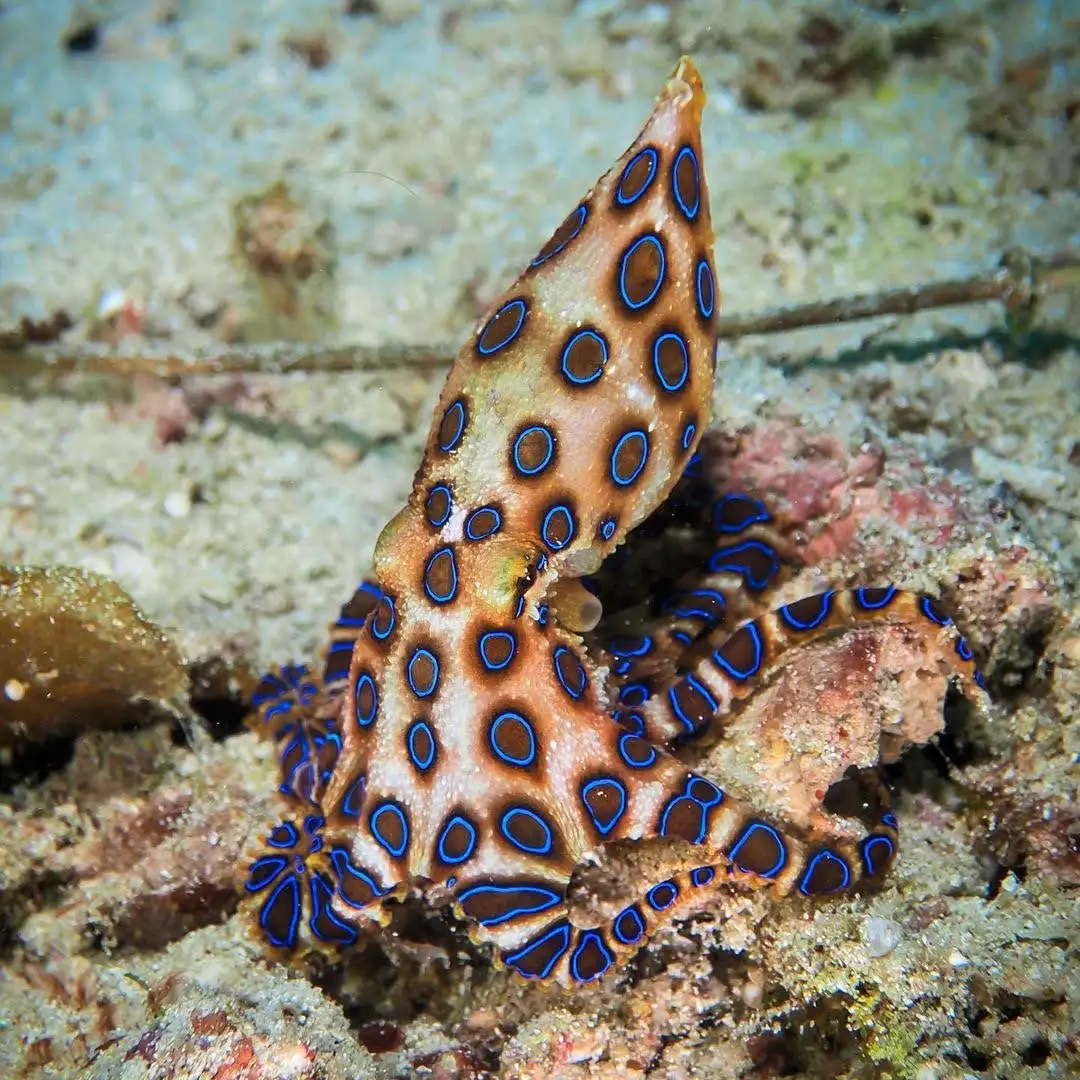
Look for leaf scorpionfish and numerous nudibranchs among the reef, along with stick pipefish, cockatoo waspfish and shrimps. Pygmy seahorses hide in the shallows, and keep an eye out for wobbegong sharks resting nearby, plus the elusive blue-ringed octopus.
Information
Details
Rising seemingly from the middle of the blue, Fish Heaven tops out at approximately 8 metres on this seamount. Its exposed position and current attract large schools of fish, and good visibility reveals the striking contours of the reef, where bright white sand highlights the surrounding corals. Diveable all year round.
Barracuda school in numbers here, joined by unusually curious angelfish and fusiliers moving through the current. Grey reef, blacktip and whitetip reef sharks also patrol nearby, while a garden-eel colony occupies the deeper sandy bottom.
Information
Details
This seamount’s reef top sits just a few metres below the surface, with the current-facing side stirring up constant movement throughout the dive. Currents can run moderate to strong here, so time your visit when they’re flowing steadily for the best of the action. It dives year-round.
Dense schools of fusiliers, snapper, sweetlips and barracuda gather along the current-facing side, joined by schooling jacks and giant trevally patrolling the blue beyond. Wobbegong sharks rest on the reef below, while surgeonfish and yellow snapper move through in numbers.
Information
Details
Gua Kecil is a favourite local macro site along a coral slope, best explored slowly with attention to the tiny details of the reef. Dives year-round.
Search among the corals, crinoids and reef rubble to find blue-ringed octopuses, pygmy seahorses, ornate ghost pipefish, glorious flatworms and nudibranchs, along with plenty of other small reef creatures.
Information
Details
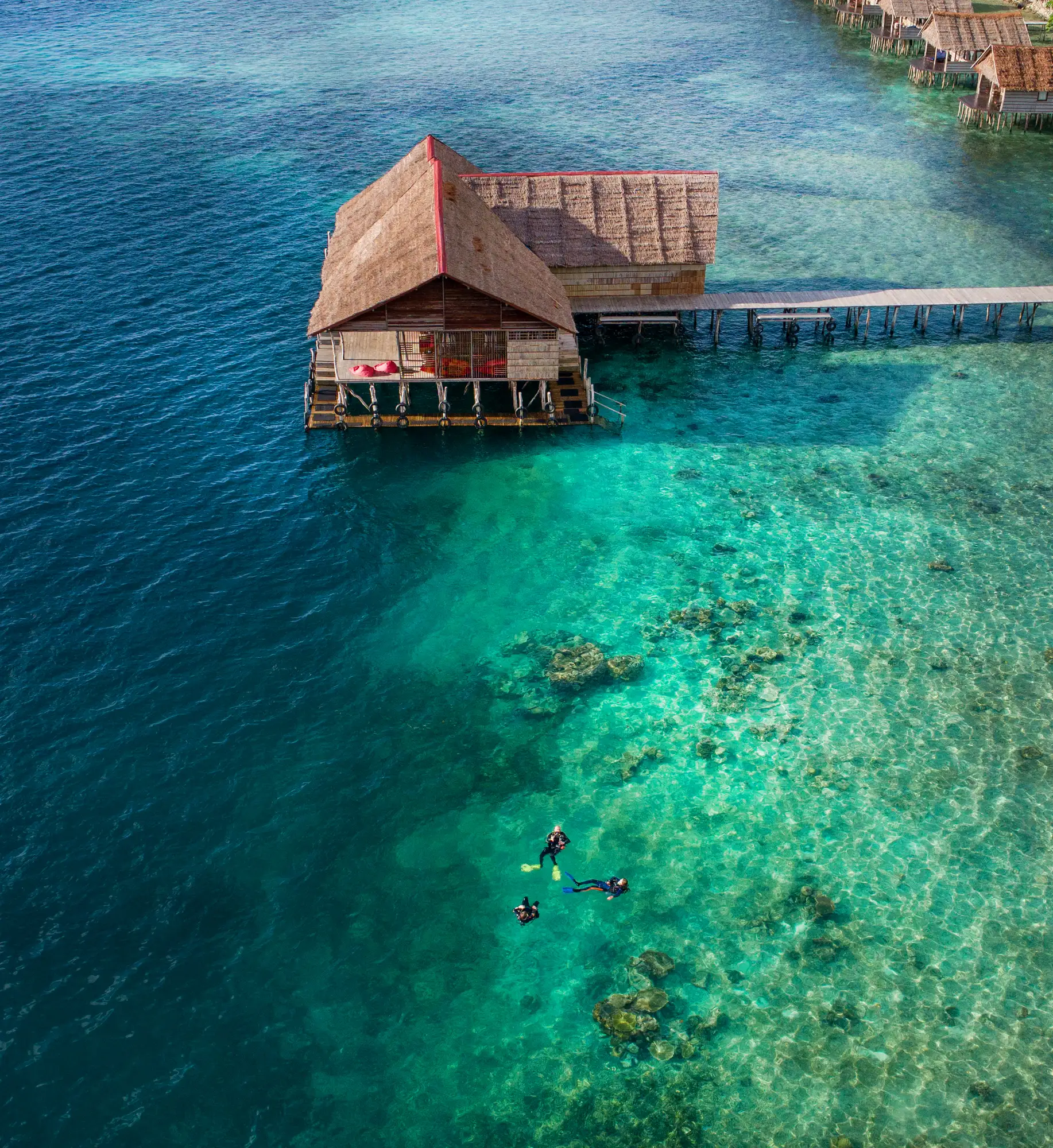
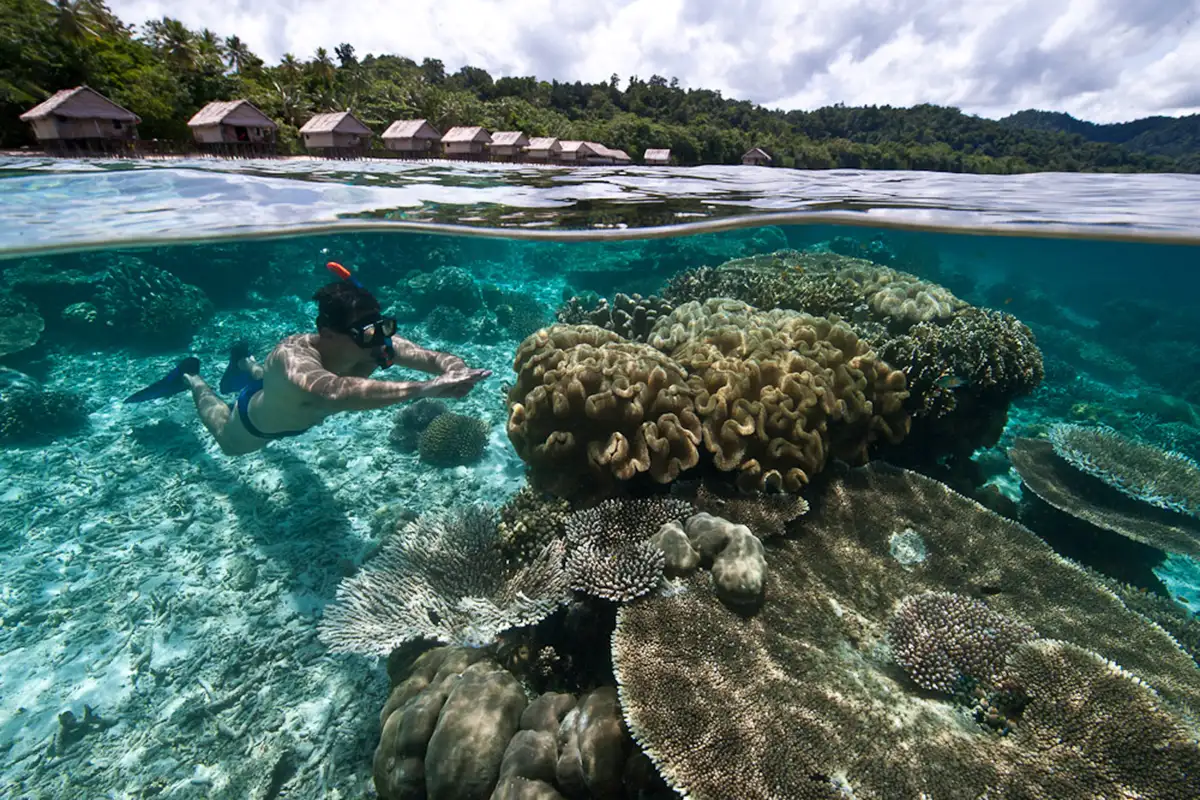
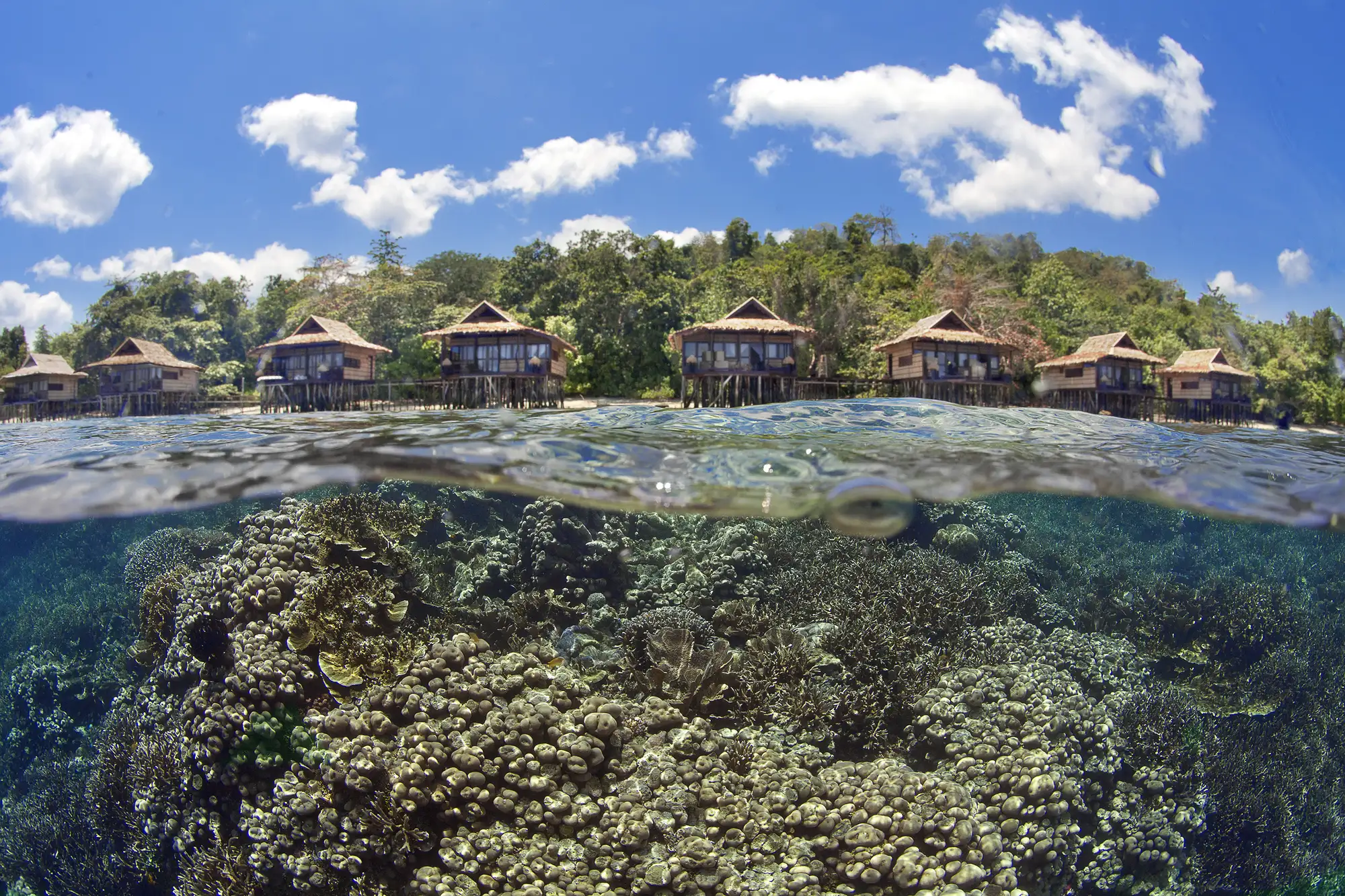
Our house reefs are directly accessible from both sides of the Lotus Papua Paradise resort, with a shallow reef slope that’s healthy, colourful and excellent for both diving and snorkelling. You can dive here all year.
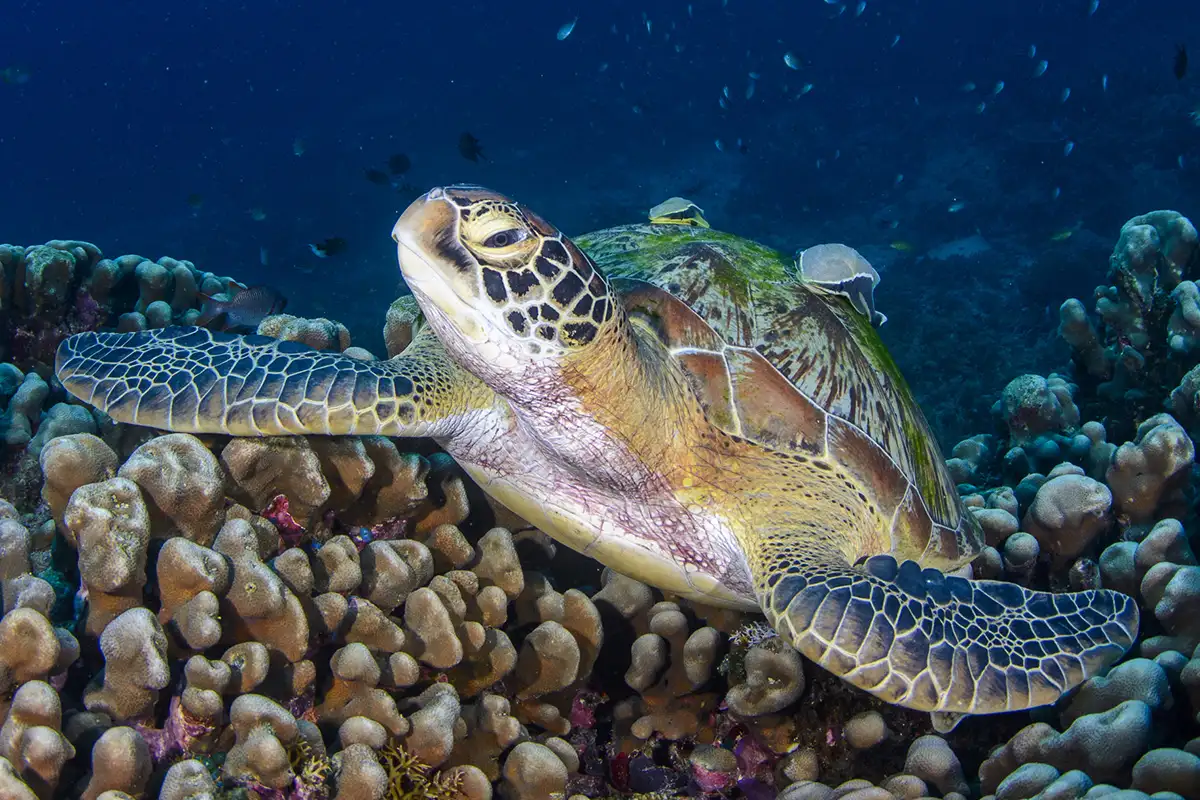
Look for walking sharks moving across the sand and hawksbill and green turtles gliding over the reef. Schooling jacks gather beneath the jetty, and families of bumphead parrotfish graze among patches of cabbage coral. Dugongs — or sea cows — occasionally pass through the area as well.
Information
Details
This exposed manta site features regular sightings of reef mantas, with oceanic mantas occasionally stopping by. The site is reserved for experienced divers, as strong currents and downcurrents can occur. Only a certain number of divers are allowed to access this site each day, so availability can sometimes be limited. Booking is only available a few days in advance, so speak with the dive team early to book this dive. Visits are subject to sea conditions, current and diver experience, and snorkelling isn’t permitted here. Best dived October to April.
In addition to manta rays, blacktip reef sharks patrol alongside giant trevally, barracuda and fusiliers moving through the current.
Information
Details
The best dives at this well-known manta cleaning station mean settling at 15 metres to watch reef mantas visit the cleaning area or circle nearby. While encounters aren’t guaranteed, when mantas are present it’s an incredible, rare dive experience. Diver numbers are limited each day to this site, so availability can sometimes be limited. Speak with the dive team in advance to reserve this dive. Best diveable between October and April, and visits are subject to sea conditions, current and diver experience.
Alongside the mantas, bumphead parrotfish and cleaner wrasse frequent the cleaning station, while butterflyfish, fusiliers and garden eels fill out the surrounding sand and reef.
Information
Details
Manta Wai is a lesser-known cleaning station only a short boat ride from Papua Paradise. This sandy plateau, dotted with coral bommies, sits at approximately 15 metres deep. Best dived October to April.
Watch for reef mantas cruising past the coral bommies, while bluespotted ribbontail rays rest on the sand nearby. Giant clams, flounders, cleaner wrasse and garden eels are also frequently spotted.
Information
Details
Mayhem is a large submerged pinnacle known for dramatic topography, with current-facing walls and ledges that attract a plethora of marine life. The dive finishes along a gentler slope filled with hard corals, colourful reef fish and smaller macro life. Current can become very strong, making Mayhem best suited to advanced divers and suitable conditions. Diveable all year round, conditions dependent.
The walls attract dense schools of fusiliers, snapper, jacks, sweetlips, batfish and barracuda, while reef sharks patrol the surrounding blue and wobbegong sharks may be found resting beneath coral-covered ledges. You can also find swirling baitfish, giant trevally and sweepers filling the coral bommies.
Information
Details
Melissa’s Garden is one of Raja Ampat’s most famous coral-garden dives. This beautiful shallow reef is covered in fields of various coral and reef life, including healthy staghorn, branching Acropora, soft corals, sea whips, sponges and crinoids. Good buoyancy is required to help protect this fragile, shallow coral garden. Diveable year round.
In addition to the coral, you’ll encounter blue-green chromis, damselfish, anthias, fusiliers, anemonefish, giant clams and Bargibanti pygmy seahorses.
Information
Details
This site’s structures are different from many other Raja Ampat sites, making a dive here especially memorable. The dramatic topography makes you feel like you’re exploring a cavern, with walls, overhangs, and recessed sections. Dives here can be challenging depending on the tide. Diveable all year round, conditions dependent.
Schooling sweetlips, fusiliers and snapper move through the overhangs, alongside batfish and reef sharks. Wobbegong sharks rest in the recesses, and nudibranchs cling to the soft coral throughout.
Information
Details
Dive down 26–30 metres to the remarkably intact World War II P-47 Thunderbolt aircraft sunk on the coral reef slope by Wai Island. Corals and sponges grow on its wings and propeller, making this a unique dive site to explore. Diveable year round.
At this wreck site you can encounter sweetlips, batfish, angelfish, lionfish and moray eels.
Information
Details
This dynamic site showcases bright white sand that contrasts with a colourful reef teeming with life. Each current brings new fish activity, making this site full of surprises. Strong current, including up- and down currents, can occur, so reef hooks may be used when conditions require it. This site is diveable year round.
Redtooth triggerfish and tawny nurse sharks share the reef with schooling fusiliers, trevallies and barracuda, while blacktip and whitetip reef sharks rest or pass along the slope.
Information
Details
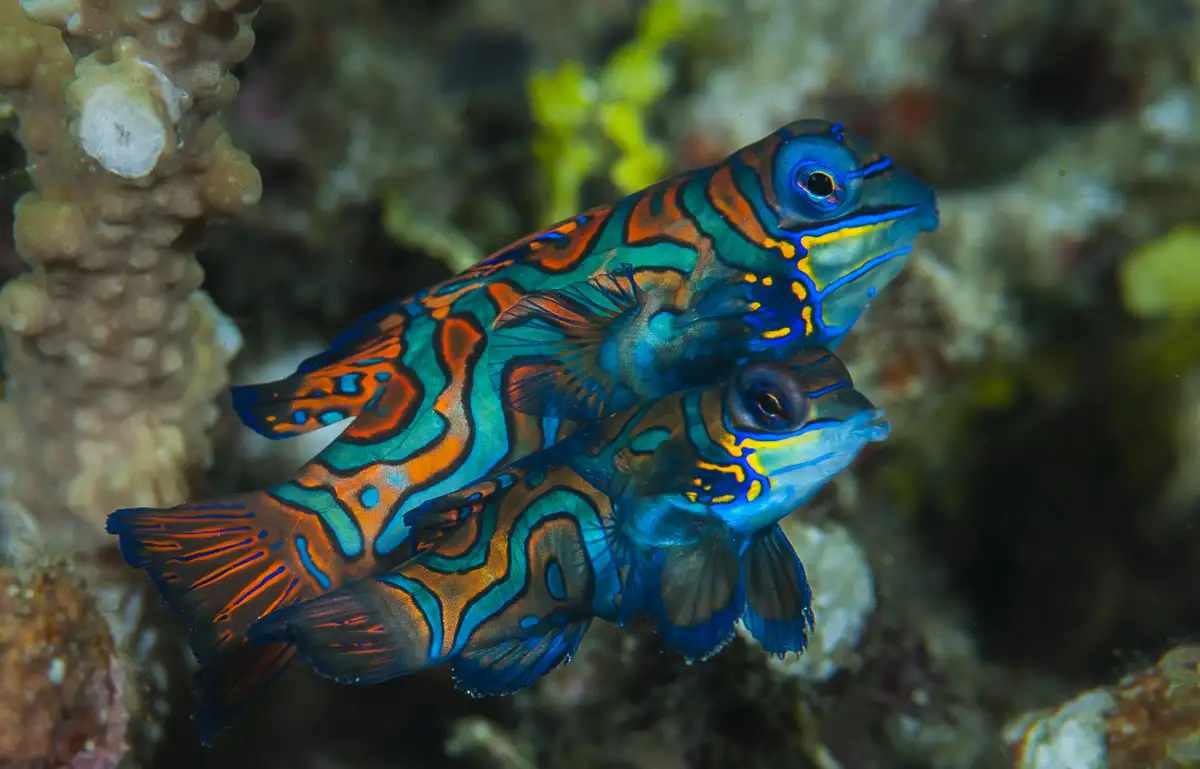
We visit this rubble and slope reef site around dusk, timed to catch mandarin fish emerging from the reef for their mating ritual in the shallows. Once the sun sets, continue the dive to explore what else the site has to offer after dark. Diveable all year round.
Alongside the mandarin fish, look for picturesque dragonets in the same shallows. Blue-ringed octopuses can also be spotted here after dark.
Information
Details
This seamount site is a classic fish-action dive, with dense schools moving over and around the seamount. It gets especially lively when current carries nutrients across the reef, attracting predators and creating constant movement in the blue. This site is diveable year round.
Spanish mackerel and tuna hunt through the school, joined by blacktip, whitetip and grey reef sharks. You can also spot fusiliers, trevallies and batfish.
Information
Details
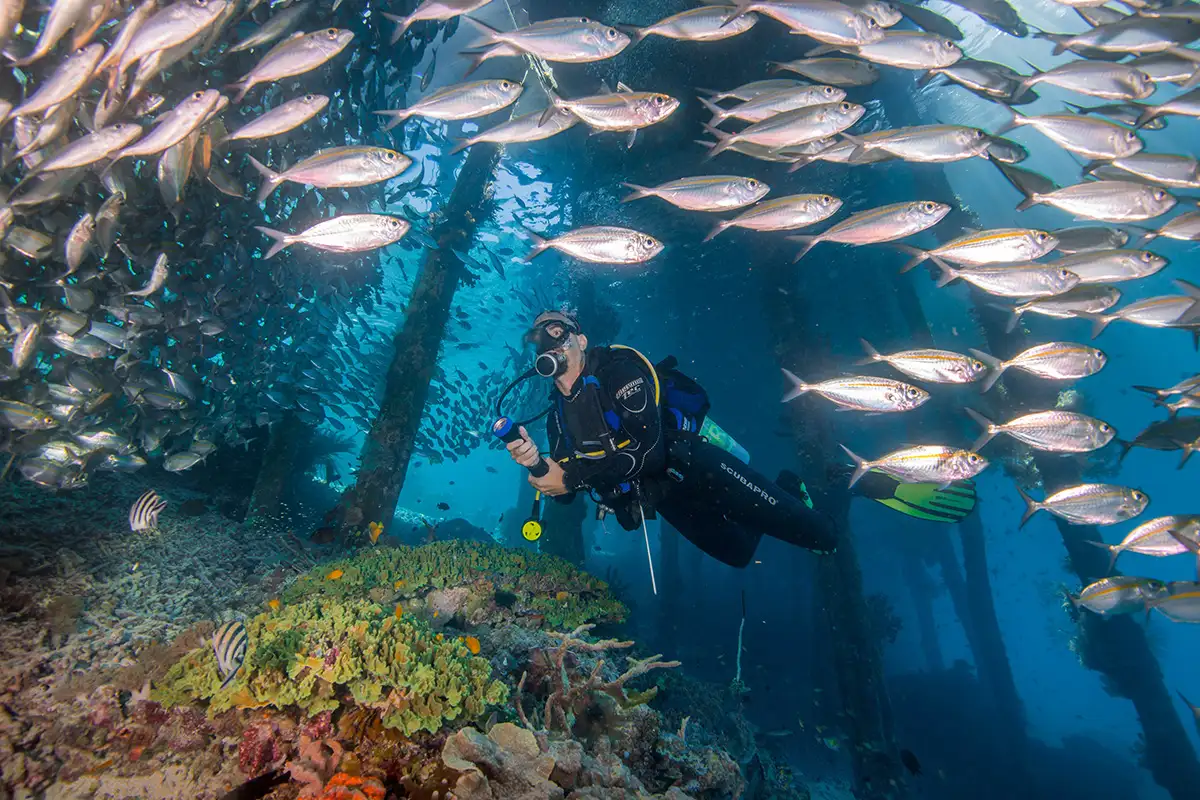
This dive ends beneath the jetty of Sauwandarek Village, where the gentle reef slope feels like swimming inside an aquarium. It’s a true highlight and a favourite among many guests. Diveable all year round.
Hundreds of bigeye trevally circle the jetty posts, while sweetlips linger undisturbed nearby and curious Indo-Pacific sergeants weave between the beams to check you out. Batfish, green turtles, snapper and giant clams are also frequently spotted.
Information
Details
Also known as “Wobbegong City,” this seamount is famous for wobbegong shark sightings, with several often resting beneath ledges or camouflaged against the reef. You can also find smaller macro life if you slow down and look patiently in the area. Diveable all year round.
Spot wobbegong sharks tucked beneath the ledges, alongside pygmy seahorses hiding in the reef. Fusiliers and trevallies move through the current, and nudibranchs cling to the coral.
Information
Details
A sloping reef surrounds a slowly disappearing island, and a sandy plateau at around 20 metres deep provides an ideal habitat for porcupine rays, barracuda, grey reef sharks, blacktip reef sharks, whitetip reef sharks, fusiliers and trevallies. This site is diveable year-round.
Information
Details
This reef slope’s coral garden seems alive as Xenia soft coral pulse in their unique way, moving and feeding together. Find numerous anemones here, while sea fans, damselfish, and other colourful reef life make this one of the more vibrant dives in Raja Ampat. Diveable all year round.
Pygmy seahorses hide among the sea fans, while numerous anemones host anemonefish nearby. You may also spot anthias and nudibranchs.
Information
Details
Yellow Coco is one of our favourite night-dive sites, a sandy slope where nocturnal critters emerge from the sand, rubble, and reef after dark. All that’s needed is patience, a careful eye, and a torch as a guide helps you discover what’s hiding here. Diveable all year round.
Look for coconut octopuses, bobtail squid and nudibranchs moving across the sand. Keep watching for rarer finds like blue-ringed octopuses, flamboyant cuttlefish and Lembeh pygmy sea dragons tucked into the rubble.
Information
Details
Yenkarom’s sandy contours along this sloping reef create the perfect habitat for jawfish to make their homes. Look closely and you might spot males carrying eggs in their mouths, or the partnership between shrimp gobies and pistol shrimp sharing the same burrow. This site is wonderful for macro life. Diveable all year round.
Alongside the jawfish and shrimp gobies, keep an eye out for Halimeda ghost pipefish and leaf scorpionfish blending into the reef. Several nudibranch species are also found here, including Chromodoris annae, Chromodoris lochi, Nembrotha kubaryana and Nembrotha cristata.
Dive Courses in Raja Ampat
Core Courses
Take your first steps into scuba diving with Lotus Divers, training in Raja Ampat’s biodiverse waters in the Coral Triangle. Our 3-day course pairs pool-based skills with open water dives at some of the region’s best sites, where you can spot turtles, sharks and even mantas. Complete your PADI eLearning before you arrive so all that’s left once you land is the diving itself. Upon completion, you’ll be qualified to dive to a maximum of 18 metres.
Course structure
Prerequisites
Choose your tier: Basic, Premium or VIP
All tiers include PADI certification, refreshments, and small group sizes (max 4 students per instructor).
Build on what you already know and take your diving deeper in Raja Ampat with the PADI Advanced Open Water Diver course. You’ll build confidence as you improve your diving skills in different underwater environments. This course includes five Adventure Dives, with Deep and Underwater Navigation as the two required dives. The remaining three dives can be chosen based on your interests and conditions, with options such as Drift, Peak Performance Buoyancy, Fish Identification, Night Diving and more. Adult divers will be certified to dive up to 30 metres and junior divers to age-related depth limits.
Course structure
Prerequisites
This course is available in three packages: Basic, Premium and VIP. Contact our team for more information.
All tiers include equipment rental, PADI certification, refreshments, and small group sizes (max 4 students per instructor).
Want to start your eLearning now and book your trip later? Get started with PADI and complete the practical part with us whenever you’re ready.
Every diver hopes they’ll never need to use these skills, but the confidence they bring changes the way you dive. The PADI Rescue Diver course trains you to spot problems before they happen and manage real emergencies when they do, covering everything from assisting panicked or unresponsive divers to underwater searches, rescue breathing, emergency exits and oxygen administration. You’ll put it all into practice across two realistic rescue scenarios, in what’s widely regarded as one of the most rewarding steps in a diver’s education.
Course structure
Prerequisites
This course is available in three packages: Basic, Premium and VIP. Contact our team for more information.
All tiers include full equipment rental, rescue training equipment, emergency oxygen practice, refreshments, and small-group training (max 4 students per instructor).
Want to get started now but haven’t decided when to complete the practical part? Begin your eLearning directly with PADI and book the practical session with us when you’re ready.
Specialty Courses
Dive smarter with the PADI Enriched Air Diver specialty, training you to use enriched air (nitrox) safely on future dives. In this session, build your understanding of the physiological effects of higher oxygen percentages and learn the correct procedures for using enriched air blends up to a maximum of 40% oxygen.
Course structure
Prerequisites
Course includes PADI certification, Enriched Air Nitrox eLearning, nitrox tanks for analysis and dives, and refreshments.
Not ready to book yet but keen to get a head start? Complete your eLearning directly with PADI, then book your practical session with us once your plans are set.
There are depths of the ocean most divers never reach. The PADI Deep Diver Specialty trains you to plan and execute dives safely to a maximum depth of 40 metres. Across several dives, you’ll observe how pressure affects objects underwater, complete a timed task to understand the effects of gas narcosis, and practise using emergency air supply.
Course structure
Prerequisites
Course includes PADI Deep Diver Specialty eLearning, PADI certification, full equipment rental, and all training equipment including emergency air supply and underwater torch.
Want to get started now but haven’t decided when to complete the practical part? Begin your eLearning directly with PADI and book the practical session with us when you’re ready.
There’s no better classroom for fish identification than Raja Ampat, one of the most biodiverse regions of the world in terms of fish species and marine life sightings. The AWARE Fish Identification specialty gives you the tools to classify fish into families, helping you identify the fish species you’ll spot on dives here and beyond.
Course structure
Prerequisites
Course includes PADI Fish Identification eLearning, PADI certification, full equipment rental, access to fish identification reference books and data collection slates, and refreshments.
Diving in currents can feel intimidating until you understand them. The PADI Drift Diver specialty trains you to read currents and dive them safely, embracing that feeling of flying through the water. Over this course, you’ll practice at local reefs and sites through Raja Ampat.
Course structure
Prerequisites
Course includes PADI Drift Diver eLearning, PADI certification, full equipment rental, and all necessary training equipment such as a reel, DSMB, buoys and floats, plus refreshments.
Not ready to book yet but keen to get a head start? Complete your eLearning directly with PADI, then book your practical session with us once your plans are set.
Buoyancy control is the skill that separates comfortable divers from great ones. The PADI Peak Performance Buoyancy specialty helps you fine-tune your control in the water, refining your trim and body positioning to reduce your impact on the reef. It’s especially useful if you’ve recently invested in your own dive gear and want to dial in how it feels underwater.
Course structure
Prerequisites
Course includes PADI Peak Performance Buoyancy eLearning, PADI certification, full equipment rental, and all necessary training equipment including obstacle course materials and spare weights, plus refreshments.
Want to get started now but haven’t decided when to complete the practical part? Begin your eLearning directly with PADI and book the practical session with us when you’re ready.
The ocean comes alive in a new way after dark in Bali. Dive in with our PADI Night Diver Specialty and journey through the waters with just a torch in hand, cutting through the darkness. You’ll observe the daily vertical migration, the global phenomenon where millions of marine creatures rise from the depths to the shallows. It’s at night when you’ll spot creatures hunting, feeding, sleeping, and glowing. Even in the sites you dived that very same afternoon, a night dive feels like an entirely new place on earth.
Course structure
Prerequisites
Course includes PADI premium eLearning, equipment, certification, lunch, refreshments, and transfers from Candidasa and Padang Bai.
Not ready to book yet but keen to get a head start? Complete your eLearning directly with PADI, then book your practical session with us once your plans are set.
Sharks and rays need more allies than adversaries, and this course trains you to be one. The AWARE Shark and Ray Conservation specialty teaches you to conduct survey dives, monitoring local populations and keeping an eye out for surface and underwater hazards for them. You’ll record and report your findings as a citizen scientist, contributing real data to conservation efforts.
Course structure
Prerequisites
Course includes PADI Shark and Ray Conservation eLearning, PADI certification, full equipment rental, and access to a local shark and ray species reference guide.
Want to start your eLearning now and book your trip later? Get started with PADI and complete the practical part with us whenever you’re ready.
The reef doesn’t go quiet after dark — the marine creatures that are less active during the day come out when the sun goes down. The PADI Night Diver specialty introduces you to Raja Ampat’s waters in the dark, guiding you through three night dives with just the light of a torch to guide your way.
Course structure
Prerequisites
Course includes PADI Night Diver eLearning, PADI certification, full equipment rental, and all necessary training equipment including dive lights, a backup light, and a compass.
Not ready to book yet but keen to get a head start? Complete your eLearning directly with PADI, then book your practical session with us once your plans are set.
Every dive can tell a bigger story about marine ecosystems. The PADI Underwater Naturalist specialty looks at the reef as a whole ecosystem, teaching you the relationships between different marine creatures, from vertebrates to invertebrates, and the impact people have on the environment you’re diving in.
Course structure
Prerequisites
Course includes PADI Underwater Naturalist eLearning, PADI certification, full equipment rental, an underwater slate and pencil, and access to fish and coral identification resources.
Learn how debris affects underwater environments and how you can be part of the solution for cleaner oceans with the AWARE – Dive Against Debris Diver Specialty. You’ll gain knowledge on how to safely conduct a Dive Against Debris survey and complete one debris survey dive, collecting and categorising the debris found. Then, learn how to report the data for global marine debris research and conservation efforts.
Course structure
Prerequisites
Course includes a presentation about marine debris, PADI eLearning and materials, certification, one debris survey dive, full equipment rental, and all necessary survey equipment including mesh bags and gloves for handling debris.
Want to start your eLearning now and book your trip later? Get started with PADI and complete the practical part with us whenever you’re ready.
Know how to handle emergencies both in and outside of the water. Complete your Emergency First Response course with Lotus Divers to learn Primary Care (CPR) and Secondary Care (First Aid). This specialty is for anyone who wants to learn the skills to one day save a life; no medical background or prior experience required.
Course structure
Course includes Emergency First Response Primary and Secondary Care eLearning, use of a CPR mannequin and other emergency and first aid training equipment, refreshments, and a maximum class size of four students.
Not ready to book yet but keen to get a head start? Complete your eLearning directly with PADI, then book your classroom session with us once your plans are set.
Dive Experiences & Refresher Programs
Not ready to commit to a full certification but want to start your diving adventure? The PADI Scuba Diver course certifies you to dive up to a maximum depth of 12 metres, starting with confined water sessions at our House Reef before two open water dives at some of Raja Ampat’s best diving sites.
Course structure
Prerequisites
Course includes PADI certification, refreshments, full equipment rental, and small group sizes (max 4 students per instructor). PADI eLearning isn’t included — you can purchase it independently and start learning today, before you arrive.
Give your kids their first taste of the underwater world in Raja Ampat. The PADI Bubblemaker programme introduces children from age 8 to scuba diving in a simplified, supervised setting, with a dive to a maximum depth of 2 metres at our biodiverse house reef.
Course structure
Prerequisites
Course includes a commemorative certificate, full equipment rental in kid-friendly sizes, and a maximum group size of two children per instructor.
Take your first breaths underwater in one of the most biodiverse marine environments on Earth right outside Lotus Papua Paradise in our house reef. We keep group sizes small—maximum of four participants per instructor—ensuring personalised guidance for this introduction to scuba diving. Patient and experienced instructors focus on creating a safe, relaxed and enjoyable first diving experience. If you decide to continue, this experience can count towards your PADI Open Water Diver course.
Course structure
Prerequisites
Course includes full equipment rental and the PADI Discover Scuba Diving participant guide/eLearning.
Already tried Discover Scuba Diving and want more? Join us for further supervised dives without repeating the confined-water skills, exploring our local reef or venturing further to Kri, Mansuar or Fam. Your instructor stays close throughout the dive, with maximum depth up to 12 metres.
Course structure
Prerequisites
Course includes full equipment rental, plus fruit, snacks, coffee and tea.
Been away from diving for a while? The Scuba Refresher eases you back in, giving you time to get comfortable with your equipment again, check your weighting and buoyancy, and review the dive theory that keeps you safe underwater. If you haven’t dived within the past year, this session comes before you rejoin our regular dives.
Course structure
Course includes full equipment rental, refreshments, small group sizes (max 4 divers per instructor), and a tour of our House Reef.
Snorkelling in Raja Ampat
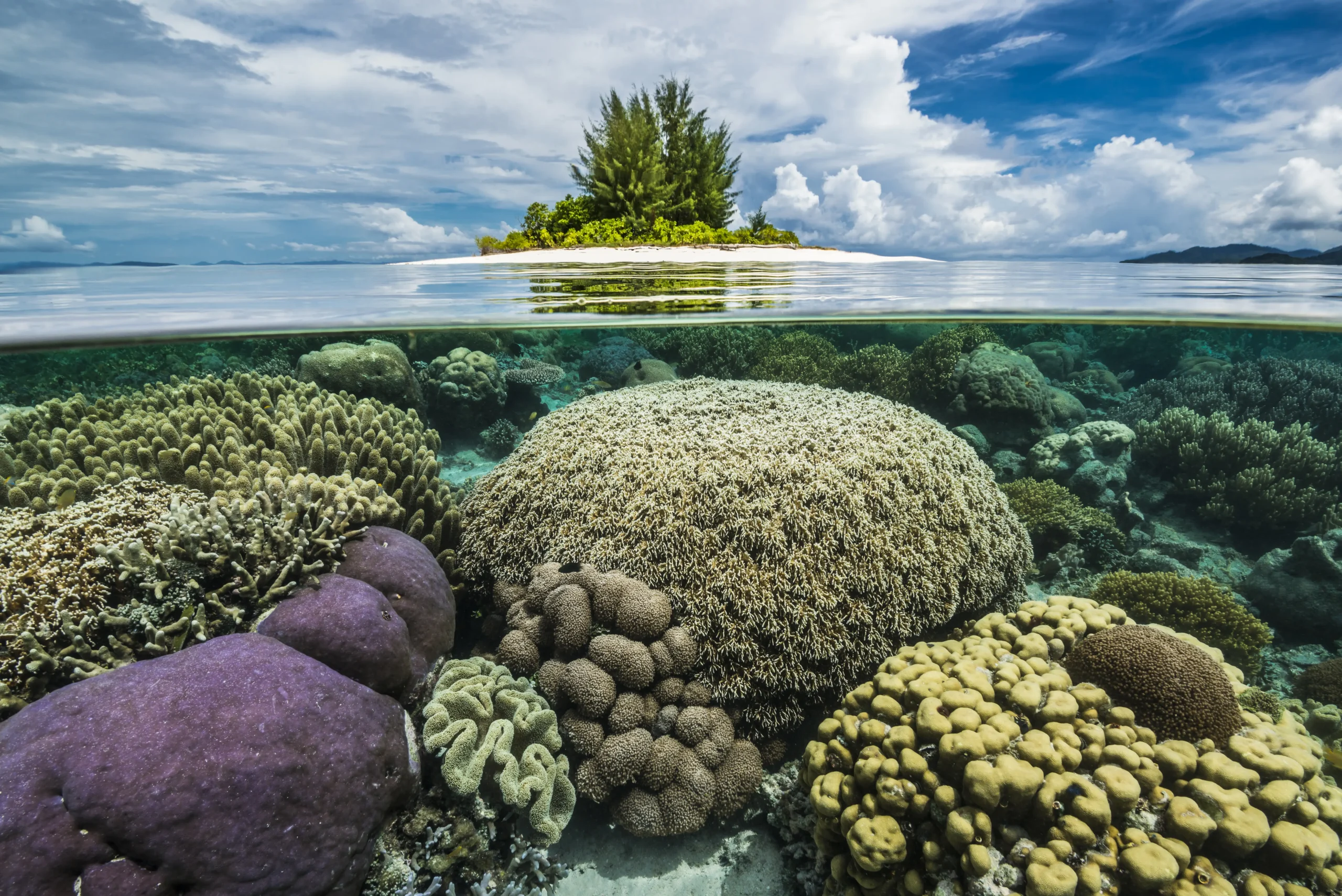
Snorkel your way through some of Raja Ampat’s most vibrant reefs with the Lotus Divers team, based out of Lotus Papua Paradise on Birie Island. Whether you explore our house reef outside the resort or take a full day trip to sites like Kri and the Fam Islands, you’ll discover colourful coral gardens and a diversity of marine life like sharks, rays, turtles, and more.
Our team’s mission is to make sure you are comfortable and safe, with our 4 snorkellers to 1 guide ratio. All equipment is provided, including children’s sizes, and Raja Ampat’s warm, biodiverse waters welcome snorkellers of every level year-round. Every session follows our Green Fins guidelines, so you can explore knowing the reef stays just as vibrant for the next guest.
Information
Details
Cape Kri is world-renowned for its extraordinary fish life, with 374 species recorded in a single survey. For snorkellers, this site is all about movement, current and schooling fish — when conditions are suitable, you’ll drift with the current while the boat follows and picks you up at the end. This full-day trip includes a minimum of three guided snorkelling sessions, lunch, and time to relax on the beach or visit the local village.
Marine life highlights here include: schooling fish, jacks, barracuda, sweetlips, redtooth triggerfish, fusiliers, and blacktip and whitetip reef sharks.
Information
Details
This colourful reef slope offers a relaxed snorkelling experience along its shallow edge, with large gorgonian sea fans rising from the reef and soft corals and coral patches sheltering small reef fish. It’s part of the same full-day Fam Islands trip, subject to surcharge and minimum participant numbers, with three guided snorkelling sessions and the Piaynemo viewpoint hike included.
Marine life highlights here include: turtles, blacktip reef sharks, bumphead parrotfish and Spanish mackerel.
Information
Details
Friwen Wall is one of the few places in the area where snorkellers can follow a dramatic coral-covered wall, beginning only a few metres beneath the surface. Soft corals, colourful sponges and large sea fans decorate the vertical reef, creating a beautiful backdrop against the deep blue water below. This full-day trip includes a minimum of three guided snorkelling sessions, lunch, and time to relax on the beach or visit the local village.
Marine life highlights here include: anemonefish, butterflyfish, gorgonian sea fans, sea whips, sergeants and parrotfish.
Information
Details
Access the house reefs right outside Lotus Papua Paradise. House Reef 1 sits on the jetty side, and you can enter the water directly from the jetty. Explore beautiful lettuce coral on this easy snorkel for all experience levels. House Reef 2 is on the back side of the resort, accessible by a short walk. Staghorn, brain and table corals fill the shallows. While you can snorkel these reefs alone, please always inform the dive centre before snorkelling and follow local guidance on tides and conditions.
Marine life highlights here include: baby sharks, clownfish, giant clams, turtles, schooling trevally, walking sharks and the occasional dugong.
Information
Details
Manta Wai is a shallow local manta cleaning station, one of our most exciting nearby snorkelling possibilities when conditions and manta activity allow. Manta encounters are seasonal and never guaranteed. Best during manta season, October to April, with visits depending on sea conditions, current and manta activity.
Marine life highlights here include: reef manta rays, bluespotted ribbontail rays, marble rays, trevallies and anemonefish.
Information
Details
One of Raja Ampat’s most famous coral gardens, this shallow reef is covered in healthy staghorn and branching Acropora corals, best enjoyed right in the shallows for a colourful, unforgettable experience. It’s part of a full-day trip to the Fam Islands, subject to surcharge and minimum participant numbers, with three guided snorkelling sessions and the Piaynemo viewpoint hike included.
Marine life highlights here include: anthias, damselfish, chromis, fusiliers and Napoleon wrasse.
Information
Details
The jetty at Sauwandarek Village shelters far more than local boats — beneath the surface is a thriving reef that can feel like floating inside a natural aquarium. This full-day trip includes a minimum of three guided snorkelling sessions, lunch, and time to relax on the beach or visit the local village.
Marine life highlights here include: bigeye trevally, sweetlips, Indo-Pacific sergeants, batfish, green turtles and giant clams.
Information
Details
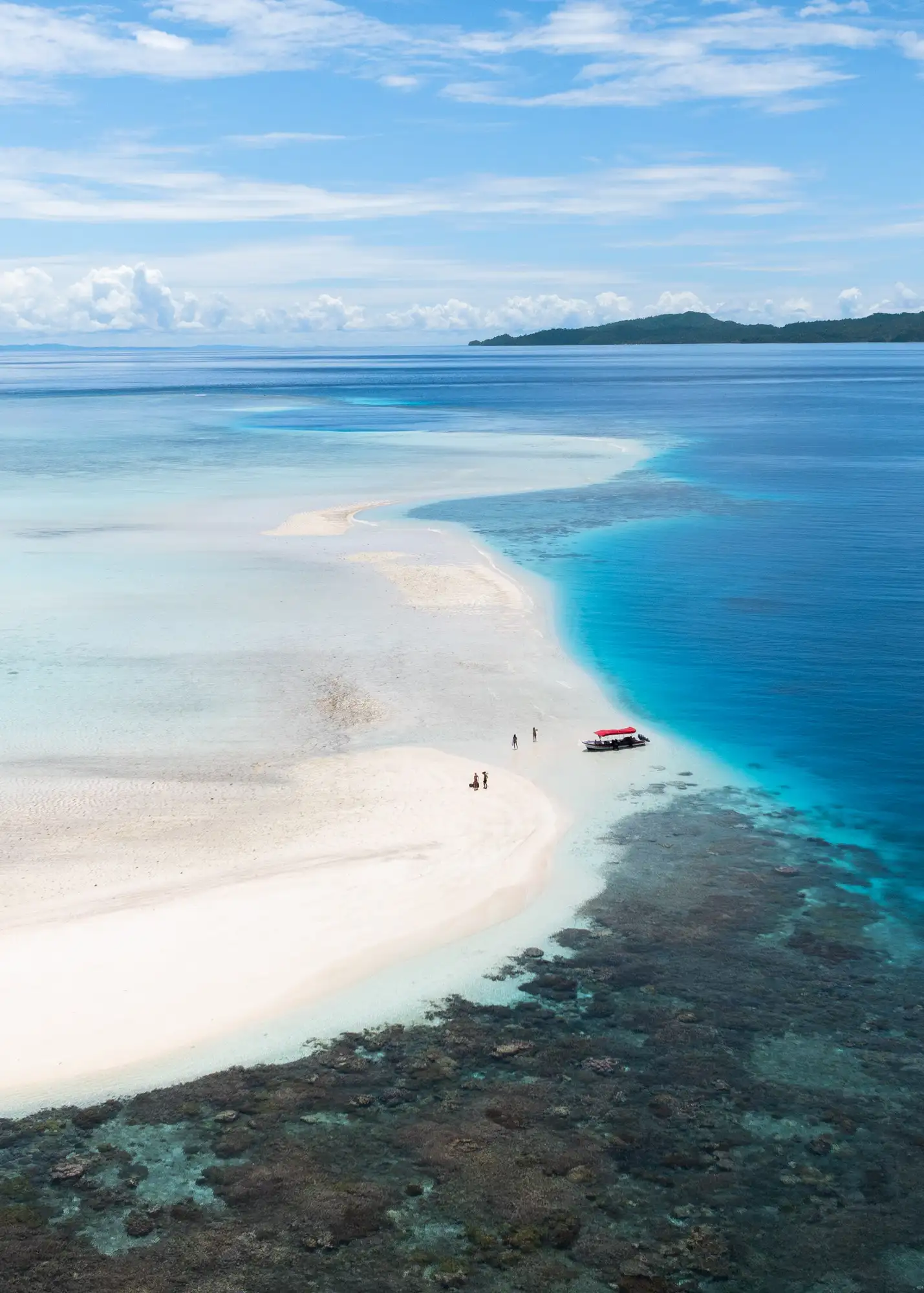
Urun East and Urun West surround a small sandbank and shallow reef off the coast of Batanta. At higher tides, the island seems to disappear, leaving a submerged reef to explore, with healthy hard corals, sandy patches and plenty of small reef life throughout.
Marine life highlights here include: pufferfish, triggerfish, anemonefish, cardinalfish, boxfish, coral gobies, blennies, rabbitfish, turtles, and Porites, Montipora, Pocillopora and Stylophora corals.
Information
Details
Wai West is a colourful shallow reef known for its healthy coral gardens and areas of gently pulsing Xenia soft coral. Anemones are scattered across the reef throughout, making this a varied and rewarding local snorkelling site.
Marine life highlights here include: anemonefish, fusiliers, reef fish, turtles, bumphead parrotfish, pufferfish and bluespotted ribbontail rays.
Information
Details
Yenbuba and Ransiwor offer shallow coral gardens with a lively mix of reef fish and healthy hard corals, with staghorn and cabbage corals spreading across the reef. This full-day trip includes a minimum of three guided snorkelling sessions, lunch, and time to relax on the beach or visit the local village.
Marine life highlights here include: batfish, sweetlips, colourful reef fish, green turtles, Napoleon wrasse and bumphead parrotfish.
Safety Standards
Dive with peace of mind knowing your safety is our top priority
Our dive centre runs a dedicated compressor room, with three Coltri compressors for air fills and two Bauer compressors feeding a Bauer membrane nitrox system. Certified divers enjoy free nitrox, allowing for more conservative dive profiles and added flexibility across multi-dive days.
Emergency equipment includes oxygen kits, first aid supplies, marine radios, compasses, life jackets and emergency communication equipment. Boats carry appropriate safety equipment for local diving and day trips, with emergency oxygen on hand to support extended evacuation scenarios if needed.
Papua Paradise has emergency procedures in place for both local diving and day-trip diving, supported by an Emergency Action Plan for dive-related incidents. The nearest hyperbaric chamber is in Sorong, around 1.5 hours from the resort by speedboat under normal conditions, and operates during regular weekday hours, Monday to Friday.
The dive centre maintains emergency oxygen supplies suitable for extended evacuation support, and all dive boats carry appropriate safety and communication equipment. All divers are required to hold valid diving insurance, and as a DAN Insurance Partner, the dive centre can help guests with information on dive insurance options where needed.
The dive centre uses well-maintained rental equipment from trusted brands, including Aqua Lung regulators and BCDs. Equipment is serviced annually by the dive centre team and supported by an on-site technician, with cylinders visually inspected annually, valves serviced regularly, and hydrostatic pressure testing carried out in line with applicable standards.
Our team prepares spare equipment for every dive trip and carries additional essential items to support safe operations. Free nitrox is available to all certified divers, with nitrox analysers brought on every dive trip.
Our standard ratio is a maximum of four divers per guide, part of a Lotus Divers standard across our dive centres that keeps dive groups small. This allows guides to provide attentive supervision, adapt each dive to guest experience levels, and maintain high safety and environmental standards. Private guides and private dive trips are available on request, subject to availability.
All divers are required to complete a health self-declaration through a PADI medical questionnaire before diving. Given the resort’s remoteness, this helps ensure the highest safety and well-being of all guests, guides, and dive groups.
Book your diving holiday in Raja Ampat with Lotus Divers
We use cookies and similar technologies to enhance your browsing experience, analyze site traffic, and personalize content and advertising. Privacy Policy
Manage your privacy and cookie settings
Customize your preferences below. You can enable or disable different types of cookies according to your needs.
Essential cookies required for basic website functions, security, and accessibility. These cannot be deactivated.
Help us understand how visitors interact with our website to improve performance and user experience.
Used to track visitors across websites to deliver relevant advertisements and measure campaign effectiveness.
Enable enhanced functionality and personalization, such as remembering language preferences.